FJ / FE / FC
1953-1960 / Sedan / Coupe / Australia
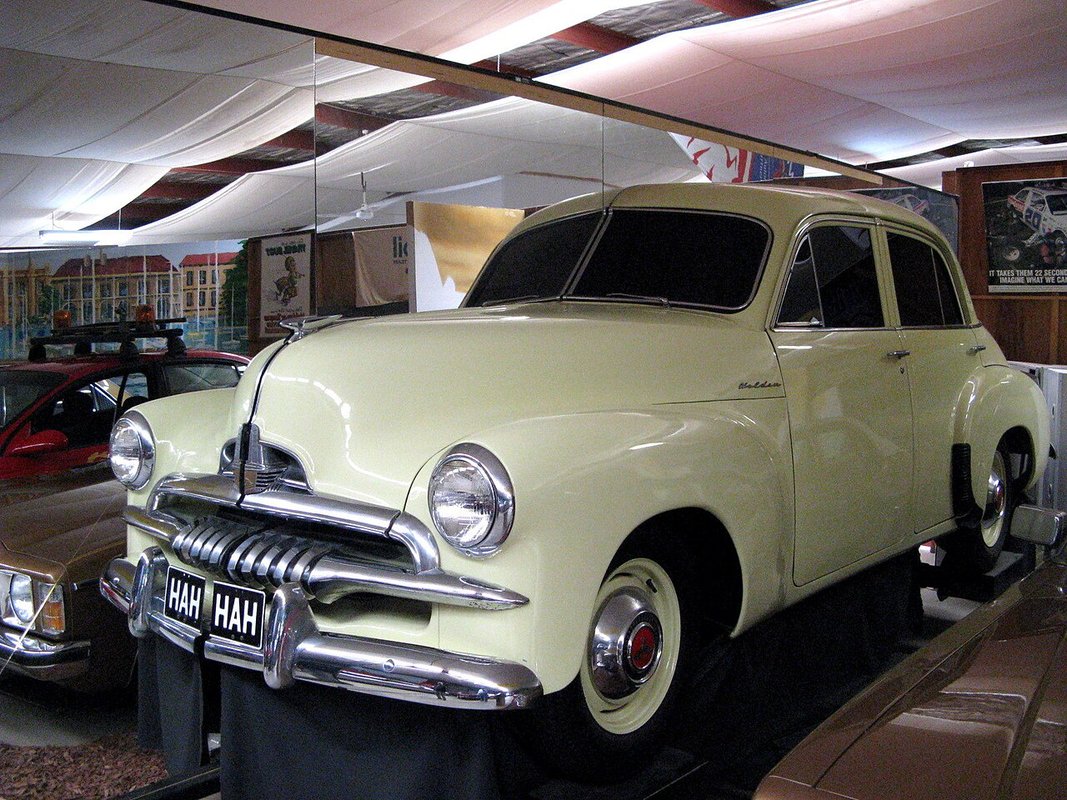
Photo: Museumsfotografierer / Wikimedia Commons Public domain
The Holden FJ, FE, and FC represent the golden age of Australian automotive independence, marking the point where Holden moved beyond its initial Chevrolet-based FX to develop genuinely local engineering. Launched in 1953, the FJ was Australia's answer to affordable, reliable family motoring, and it quickly became the car that defined post-war Australian life. These models weren't imported components dressed in local badges, they were built on an Australian chassis with Australian engineering solutions, and that mattered enormously to a nation still finding its manufacturing feet. The FE arrived in 1956 with a more modern look and increased power, while the FC pushed refinement further in 1958, but all three generations share that unmistakable character and genuine sense of purpose.
What made these Holdens special wasn't exotic engineering or raw performance, it was the fact that they were ours. They dominated Australian roads throughout the 1950s and early 1960s, and they proved that a small nation could build genuinely competitive cars. On the racing front, they earned their stripes in period competition, holding their own against imported machinery and establishing a template for Australian motorsport that would echo through decades. The FJ, FE, and FC became cultural icons, symbols of Australian confidence and ingenuity, and they're still celebrated today by enthusiasts who appreciate their honest engineering, solid construction, and that peculiar charm that comes from post-war pragmatism.
For the enthusiast today, these cars represent accessible motoring history. They're straightforward to work on, affordable to acquire, and they connect you to something genuinely important in Australian automotive culture. Whether you're drawn to their mechanical simplicity, their period character, or their significant place in our national motoring story, an FJ, FE, or FC rewards you with driving that feels authentic and unfiltered.
Thinking of buying a FJ / FE / FC?
What to look for, what to pay, what to avoid.
What to watch for.
Worn Bearings and Low Oil Pressure
Common Engine, Grey Motor (132.5ci / 2.17L Flathead Six)
Worn Bearings and Low Oil Pressure
CommonOil pressure drops below 20 psi at idle when hot. Knocking noise from the bottom end, particularly under load. May also develop a deep rumble at idle.
The Grey Motor uses plain bearings (babbit metal shells) for the mains and big ends. After 70+ years, even well-maintained engines have worn bearings. The oil pump is a gear-type unit that also wears over time, reducing oil flow.
A bottom-end rebuild, new main bearings, big-end bearings, thrust washers, and an oil pump rebuild or replacement. The crank should be checked for wear and reground if necessary. Budget $1,500-2,500 at a machine shop experienced with these engines. The Grey Motor is simple to strip and reassemble, a skilled home mechanic can do this in a weekend with the engine out of the car.
Valve Seat Recession
Common Engine, Grey Motor (132.5ci / 2.17L Flathead Six)
Valve Seat Recession
CommonGradual loss of compression, rough running, tapping noise from the engine that gets worse over time. May develop a misfire.
The Grey Motor was designed to run on leaded petrol. The lead in the fuel provided a cushion between the valve face and the valve seat, preventing metal-to-metal contact. Modern unleaded fuel eliminates this cushion, and the soft cast-iron valve seats wear, the valves gradually recede into the head.
The cylinder block needs to be machined to accept hardened valve seat inserts. This is a machine shop job, the block must be removed from the car. Budget $800-1,500 for a full valve seat insert job. Alternatively, use a lead replacement additive (Valvemaster or similar) in every tank of fuel. This is a Band-Aid solution but it slows the recession significantly and is adequate for cars that aren't driven daily.
Overheating in Modern Traffic
Critical Engine, Grey Motor (132.5ci / 2.17L Flathead Six)
Overheating in Modern Traffic
CriticalTemperature gauge climbs or the engine boils over in slow traffic or on hot days.
The Grey Motor's cooling system was designed for 1950s driving conditions, sustained speeds on open roads, not crawling through suburban traffic in 35-degree heat. The original radiator is marginal for modern conditions, the water pump capacity is modest, and the engine-driven fan only moves adequate air at highway speeds.
Flush and check the radiator, a 70-year-old radiator is almost certainly partially clogged. Have it recored ($300-600) or fit a new aluminium replacement ($400-800). Add an electric thermo fan behind the radiator for low-speed cooling. Ensure the thermostat is functioning correctly (replace it, they're cheap). Check that the fan belt is tight and the water pump is not leaking.
Fuel Pump Failure
Common Engine, Grey Motor (132.5ci / 2.17L Flathead Six)
Fuel Pump Failure
CommonEngine stalls, won't restart, or runs inconsistently. Fuel starvation symptoms, the engine dies under load but may restart after sitting for a few minutes.
The mechanical fuel pump is driven off the camshaft and uses a rubber diaphragm that perishes with age and modern fuel blends. When the diaphragm fails, the pump can't draw fuel from the tank.
Replace the fuel pump diaphragm (rebuild kits are available, $30-60) or replace the entire pump ($80-150). An aftermarket electric fuel pump mounted near the tank is a common upgrade, it provides more consistent fuel pressure and eliminates the mechanical pump as a failure point. If fitting an electric pump, add a fuel pressure regulator to avoid over-pressuring the carburettor.
Carburettor Deterioration
Common Engine, Grey Motor (132.5ci / 2.17L Flathead Six)
Carburettor Deterioration
CommonHard starting, rough idle, flat spots on acceleration, flooding (fuel running out of the carby), black smoke, poor fuel economy.
The Stromberg carburettor's internal components, needle valve, float, accelerator pump diaphragm, gaskets, all deteriorate with age. Ethanol in modern fuel attacks old rubber seals. Jets can clog from fuel residue, particularly if the car sits for extended periods.
Rebuild the carburettor with a rebuild kit ($50-100 if you can source one). These are simple single-barrel carburettors that can be stripped and rebuilt on a kitchen table. The challenge is sourcing genuine Stromberg rebuild kits, they're becoming scarce. Some owners convert to a Weber 32/36 DGAV, which is a bolt-on replacement that provides better throttle response and easier tuning. Budget $300-500 for a Weber conversion.
Second Gear Synchro Wear
Minor Transmission
Second Gear Synchro Wear
MinorGrinding or crunching when shifting into second gear, particularly on quick downshifts. May also be reluctant to engage second.
The synchromesh on second gear in the 3-speed manual wears faster than the other gears because it's the most-used ratio. After 70 years, even a lightly-used gearbox will have worn synchros.
Gearbox rebuild with new synchro rings. Budget $800-1,500. Many owners learn to double-clutch on downshifts to extend synchro life, it's a skill worth developing. Some drivers simply accept the crunch and live with it.
Join the conversation.
Common questions.
What is the Grey Motor?
The Grey Motor is Holden's original engine, a 132.5 cubic inch (2,171 cc) flathead inline-six that powered every Holden from the 48-215 in 1948 through to the FC in 1960.
What's the difference between an FJ and an FC?
The FJ (1953-1956) and FC (1958-1960) share the same basic platform and Grey Motor engine, but the FC is a meaningfully improved car. The FC has a wider body with more interior space, revised front suspension with better handling, improved brakes, a slightly more powerful version of the Grey Motor (52 hp vs 45 hp), and a more contemporary appearance.
Can I still get parts for an FJ/FC?
Yes, though the supply chain requires more effort than for newer classics. Mechanical parts for the Grey Motor, gaskets, bearings, seals, valve components, ignition parts, brake components, are still manufactured by specialists like Rare Spares and Restoration Industries.
Can I run an FJ/FC on unleaded fuel?
Yes, with a caveat. The Grey Motor was designed for leaded fuel, and the lead provided a cushion for the valve seats.
Own a FJ / FE / FC?
Share your car with the community. explore more Holden models.