E24 6-Series
1976-1989 / Coupe / Germany
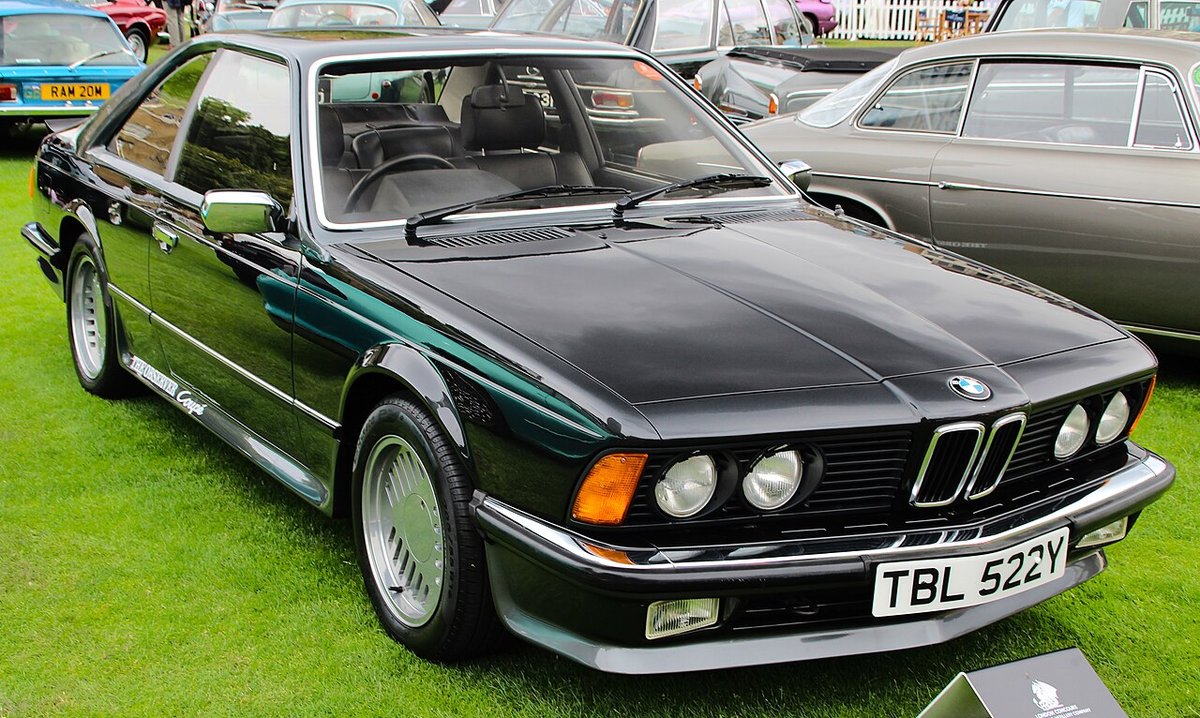
The BMW E24 6-Series was the company's grand touring flagship from 1976 to 1989, a car that redefined what a luxury coupe could be. With its long bonnet, clean lines, and purposeful stance, the E24 represented the height of Bavarian design language in the 1970s and 80s. It was a proper driver's car that happened to be extraordinarily beautiful, featuring a range of inline-six and later V12 engines that made it genuinely quick despite its considerable size. The 6-Series offered the sort of timeless elegance that only a handful of cars from that era can claim, and it remains one of BMW's most celebrated designs.
In Australia, the 6-Series found a genuine following among enthusiasts who appreciated its blend of performance and sophistication. The car featured prominently in local automotive culture and remains highly regarded in the classic car scene, particularly among those who value engineering excellence and understated luxury. Australian owners have long championed the E24 for its mechanical reliability and the way it has aged gracefully compared to many of its contemporaries. The model appears regularly at Concours events and in private collections across the country, valued for its investment potential and the sheer driving pleasure it provides.
What makes the E24 particularly significant is how it bridged the gap between sports car and luxury tourer without compromising either purpose. Whether powered by the 3.0L six or the magnificent 5.0L V12, every E24 delivered composed, refined performance that felt special every time you drove it. Today, these cars are experiencing a well-deserved resurgence in desirability, with discerning collectors recognizing them as some of the finest grand tourers ever built.
Thinking of buying a E24 6-Series?
What to look for, what to pay, what to avoid.
What to watch for.
1. Front Subframe Mount Corrosion
Minor Structural and Body
1. Front Subframe Mount Corrosion
MinorThe front subframe mounting points corrode from road spray and accumulated grime. In advanced cases, the mount tears away from the body under braking or over bumps, causing a complete loss of front suspension geometry.
The subframe mounts are box sections that trap moisture and road salt. The factory underseal deteriorates with age, exposing bare metal. Australian cars suffer less than European examples, but coastal and rural cars (gravel road spray) are still affected.
Mild surface corrosion can be treated with rust converter and cavity wax. Structural corrosion requires cutting out the affected metal and welding in new fabricated sections. Cost: $1,500-4,000 depending on severity. This is a job for an experienced fabricator, not a panel beater.
2. Rear Trailing Arm Pickup Point Corrosion
Minor Structural and Body
2. Rear Trailing Arm Pickup Point Corrosion
MinorThe rear trailing arm mounting points weaken from corrosion, causing the rear suspension to shift under load. Symptoms include vague rear-end handling, uneven rear tyre wear, and clunking from the rear when cornering.
The same moisture-trapping box section issue as the front subframe. The trailing arm mounts also bear significant dynamic loads, so even mild corrosion weakens them beyond safe limits faster than a static panel.
Reinforcement plates welded over the existing mounts. If the original metal is too far gone, the entire section needs cutting and fabricating. Cost: $1,000-3,000. Inspect from below on a hoist.
3. Windscreen Surround Corrosion
Critical Structural and Body
3. Windscreen Surround Corrosion
CriticalBubbling paint around the windscreen edges, particularly at the lower corners. By the time paint is bubbling, the underlying metal is often perforated.
The rubber windscreen seal traps moisture against the pinch weld. The factory sealant under the glass deteriorates with age, allowing water ingress between the glass and the body. UV exposure in Australia accelerates the rubber seal degradation.
The windscreen must be removed to properly repair the surround. Corroded metal is cut out and new metal welded in. The windscreen is refitted with new sealant and seal. Cost: $2,000-4,000. This is not a job you can ignore, water entering the cabin causes further damage to the footwells and wiring.
4. Door Bottom Corrosion
Common Structural and Body
4. Door Bottom Corrosion
CommonThe lower edges of the doors develop rust bubbles. In advanced cases, the door skin perforates. Paint appears to blister from the inside out.
The E24's pillarless doors have drain holes at the bottom that block with road grime and sealant residue. Water entering through the window channels collects inside the door and cannot escape. The water sits against the door skin and corrodes from the inside.
Clear the drain holes as preventive maintenance. Once the door skin is perforated, repair involves cutting out the corroded section and welding in new metal, or sourcing a replacement door shell, which is increasingly difficult and expensive. Repair cost: $800-2,000 per door. Replacement doors: $1,500-3,000 when available.
5. Timing Chain and Tensioner Wear
Critical Engine, M30 (633CSi, 635CSi)
5. Timing Chain and Tensioner Wear
CriticalRattling noise from the front of the engine on cold start, lasting 2-10 seconds until oil pressure builds. In severe cases, the rattle persists when warm. If the chain jumps teeth, the engine timing shifts and performance drops dramatically, in worst cases, valve-to-piston contact occurs.
The M30 uses a single-row timing chain with a hydraulic tensioner. Over 200,000+ km, the chain stretches and the tensioner guide rails wear. The hydraulic tensioner relies on oil pressure, when the engine sits, oil drains from the tensioner, allowing the chain to slap on startup.
Replace the timing chain, tensioner, guide rails, and sprockets. This is a front-of-engine job requiring removal of the radiator and front covers. Cost: $800-1,500 at a specialist. Parts: chain (Iwis OEM, ~$80), tensioner (~$150), guide rails (~$100), sprockets (~$200). The Iwis brand chain is the only one to use, cheap aftermarket chains stretch rapidly.
6. Bosch L-Jetronic Fuel Injection Issues (Early 633CSi)
Common Engine, M30 (633CSi, 635CSi)
6. Bosch L-Jetronic Fuel Injection Issues (Early 633CSi)
CommonRough idle, hesitation on acceleration, rich or lean running, poor fuel economy. The engine may start fine cold but run poorly once warm, or vice versa.
The L-Jetronic system uses an analogue air flow meter (flap-type) and a series of sensors to determine fuelling. After 40+ years, the air flow meter potentiometer wears, the coolant temperature sensor drifts out of calibration, and the wiring harness connectors develop resistance from oxidation. Vacuum leaks from perished rubber hoses compound the problem.
Systematic diagnosis starting with vacuum leak testing, then checking sensor outputs with a multimeter. The air flow meter is the most common single point of failure, rebuild kits are available ($150-250) or replacement units cost $400-800. The coolant temperature sensor (NTC type, Bosch 0280130026) is cheap at $30-50 and should be replaced proactively. Wiring harness connector cleaning and re-pinning: $200-400 at a specialist.
Join the conversation.
Common questions.
Buying and Ownership
The market has settled after strong growth in the early 2020s. A running, roadworthy 635CSi in reasonable condition starts around $35,000-40,000 AUD.
Maintenance
The critical items, in priority order: 1. **Cooling system**, Replace all rubber hoses, expansion tank, thermostat, and water pump if age and condition are unknown.
Technical
For Australian conditions, 15W-40 mineral oil is the standard recommendation. In hot climates (summer temperatures above 40C regularly), 20W-50 provides better protection.
Parts and Servicing
Primary sources: - **BMW dealers**, Still stock many mechanical parts (gaskets, seals, filters, brake components) through the BMW Classic Parts programme. Prices are high but the parts are genuine.
Own a E24 6-Series?
Share your car with the community. explore more BMW models.