Commodore (VN-VZ) / HSV
1988-2006 / Sedan / Estate / Australia
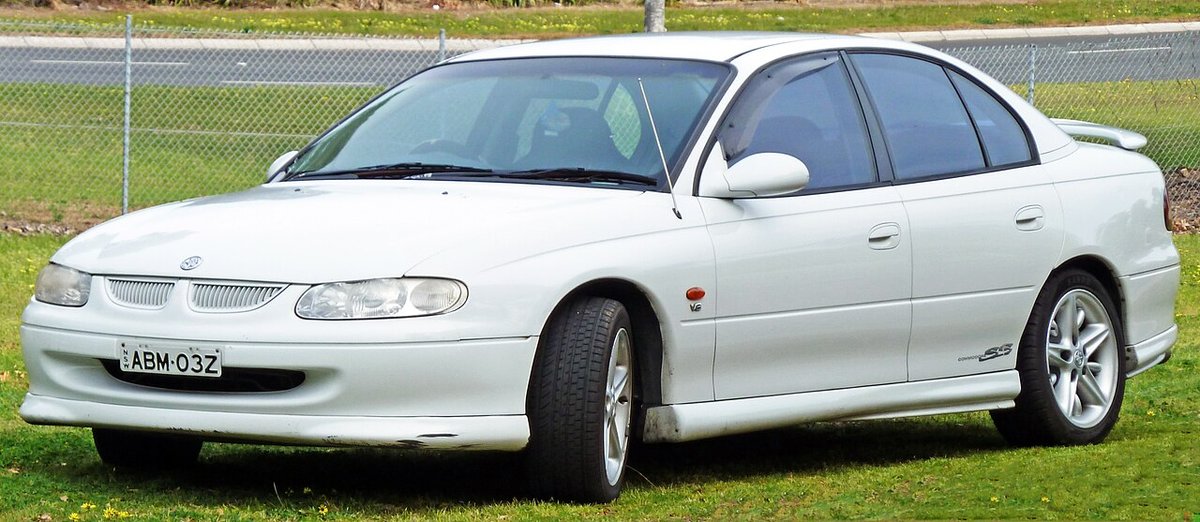
The VN to VZ Commodore represents the golden era of Australian automotive engineering, a period when Holden truly dominated the local market with a car that could stand toe-to-toe with imports. Built on the GM Opel platform but thoroughly adapted for Australian conditions and tastes, these Commodores became the default choice for families, tradies, and enthusiasts alike. The range evolved significantly across its 18-year production run, with the VN (1988-1991) introducing the modern Commodore shape, the VP bringing refinement, and subsequent generations pushing performance and technology forward. By the time the VZ arrived in 2004, Holden had created a genuinely accomplished family car that could deliver real driving engagement without pretension.
The HSV variants deserve special mention, as they transformed the Commodore into a legitimate performance machine. Models like the Clubsport, GTS, and Senator variants became iconic within the Australian motoring landscape, proving that local engineering could produce genuine muscle cars with character. These weren't just engine swaps either, proper suspension geometry, braking upgrades, and chassis tuning made them formidable performers. The HSV story is deeply woven into Australian racing heritage and grassroots car culture, with these machines becoming staples at the track and on the street.
For the classic car community, VN-VZ Commodores hold special appeal because they bridge the gap between affordable modern classics and genuine investment pieces. They're accessible, parts are abundant, modification potential is enormous, and there's a passionate club scene surrounding them. Whether you're after a family hauler, a weekend warrior, or a future collectible, these Commodores offer something genuine from an era when Holden still had its finger on the pulse of what Australians actually wanted to drive.
Thinking of buying a Commodore (VN-VZ) / HSV?
What to look for, what to pay, what to avoid.
What to watch for.
Intake Manifold Gasket Leak
Common Engine, V6 (Buick/Ecotec 3.8L, VN-VY)
Intake Manifold Gasket Leak
CommonCoolant leak at the junction of the intake manifold and cylinder heads. May present as coolant loss without a visible external leak (coolant enters the intake ports), or as a coolant stain on the side of the engine. Engine may run rough or misfire if coolant enters the combustion chamber.
The intake manifold gasket on the 3.8L V6 is a composite material that deteriorates with heat cycling. Dex-Cool coolant (used by GM) has been implicated in accelerating gasket deterioration, though this is debated. The gasket sits between an aluminium intake manifold and iron cylinder heads, different thermal expansion rates stress the gasket.
Replace the intake manifold gasket set. The job requires removing the intake manifold, fuel rail, and associated wiring. Parts: $80-150 for a quality gasket set (Felpro is the standard recommendation). Labour: 4-6 hours. This is one of the most common jobs on the 3.8L V6, and any competent home mechanic can tackle it with basic tools and a workshop manual. Retorque the intake manifold bolts to 20 Nm in the specified sequence, over-torquing warps the manifold and guarantees a future leak.
Harmonic Balancer Failure (Ecotec, VS onwards)
Critical Engine, V6 (Buick/Ecotec 3.8L, VN-VY)
Harmonic Balancer Failure (Ecotec, VS onwards)
CriticalA wobbling pulley on the front of the crankshaft. Knocking or rattling noise from the front of the engine. The drive belt may track poorly or come off.
The harmonic balancer (crank pulley) is a two-piece unit bonded with rubber. The rubber deteriorates with heat and age, allowing the outer ring to separate from the hub. The outer ring carries the serpentine belt and the crank position sensor reluctor, if it separates, the engine loses belt-driven accessories and may stall.
Replace the harmonic balancer. The old one must be pulled with a balancer puller, do not pry it off or you'll damage the crankshaft nose. Torque the bolt to the specified value (200 Nm+). A new balancer is $100-250. The job takes 1-2 hours.
Supercharger Bypass Valve Failure (L67 supercharged V6)
Common Engine, V6 (Buick/Ecotec 3.8L, VN-VY)
Supercharger Bypass Valve Failure (L67 supercharged V6)
CommonLoss of boost, rattling from the supercharger, reduced performance. The supercharger may make a whining noise that changes with the valve's operation.
The bypass valve controls how much air recirculates through the supercharger at part throttle. The valve's internal diaphragm deteriorates, causing it to stick open (no boost) or closed (excessive boost at part throttle, which loads the engine unnecessarily).
Replace the bypass valve actuator. Parts: $80-150 aftermarket. This is a 30-minute job. Some owners upgrade to a manual bypass valve for tuned applications.
Timing Chain and Guide Failure
Critical Engine, V6 (Alloytec 3.6L, VZ)
Timing Chain and Guide Failure
CriticalRattling noise on cold start that may persist after warm-up. Check engine light with codes related to camshaft timing. Rough idle, misfiring, loss of power. In severe cases, the engine won't start or runs extremely poorly.
The Alloytec V6 uses plastic timing chain guides that become brittle with heat and age. As the guides deteriorate, the chain loses tension, stretches, and can skip teeth. The VZ Alloytec was the first application of this engine in the Commodore, and early units were more susceptible.
Replace the timing chains (both banks), all guides, and tensioners. This requires removing the front cover, the engine may need to come forward or partially out of the bay depending on the workshop's preference. Parts: $300-500. Labour: 8-14 hours. Total cost at a workshop: $1,500-3,000. This is not a DIY job for most people.
Oil Leaks from Timing Cover
Critical Engine, V6 (Alloytec 3.6L, VZ)
Oil Leaks from Timing Cover
CriticalOil weeping or dripping from the front of the engine, behind the harmonic balancer area.
The Alloytec timing cover uses a gasket and sealant that deteriorate with age. The cover itself can warp slightly from heat cycling.
Reseal the timing cover. This is essentially the same job as the timing chain replacement, so do both at the same time. If you're replacing timing chains, there's zero additional cost to reseal the cover while it's off.
Hydraulic Lifter Noise
Common Engine, V8 (Holden 304, VN-VS)
Hydraulic Lifter Noise
CommonTicking or tapping noise from the top of the engine, worst on cold start. May persist for several minutes or be constant.
The 304 V8 uses hydraulic lifters that collapse when worn. Infrequent oil changes and poor oil quality accelerate lifter wear. The lifter bores in the block can also develop wear, which allows the lifter to rock slightly and lose oil pressure.
Replace the lifters. On the 304, this requires removing the intake manifold, rocker covers, and rocker assemblies. Parts: $150-300 for a complete set. Labour: 6-8 hours. If the lifter bores are worn, oversized lifters or bore repair is needed.
Join the conversation.
Common questions.
What engines were available across the VN-VZ range?
The VN-VZ used three main engine families: - **3.8L V6 (Buick/Ecotec):** VN-VY.
What is the difference between the VT and VT II?
The VT Series I (1997-1999) used the Ecotec 3.8L V6 and the Holden 304 5.
What is the LS1 and why does everyone want one?
The LS1 (RPO code LS1, Chevrolet's internal designation) is a 5.7-litre, all-aluminium, pushrod V8 designed by GM Powertrain.
What is DOD/AFM and should I worry about it?
DOD (Displacement on Demand) is GM's cylinder deactivation system, fitted to some VZ LS2 V8 models. Under light load and steady throttle, the system deactivates four of the eight cylinders to save fuel.
Own a Commodore (VN-VZ) / HSV?
Share your car with the community. explore more Holden models.