Silvia (S13 / S14 / S15)
1988-2002 / Coupe / Japan
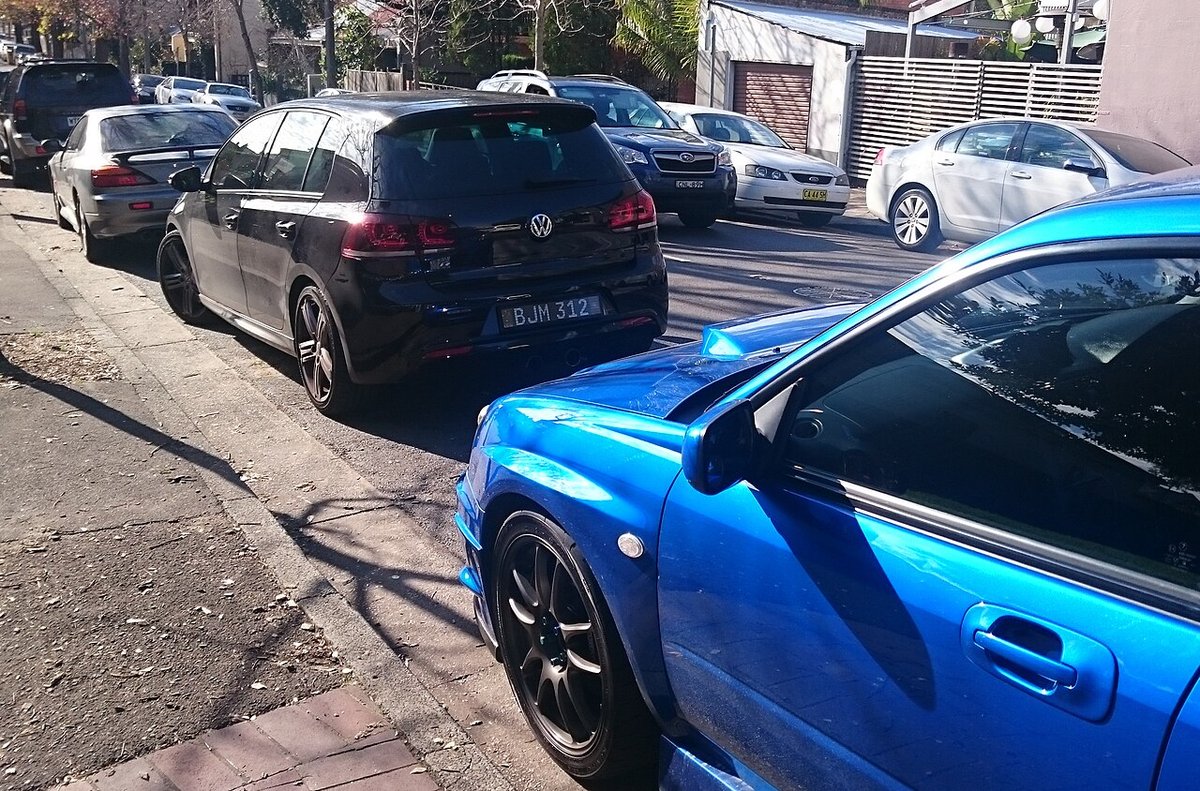
The Nissan Silvia S13, S14, and S15 generations spanning 1988 to 2002 represent one of the most important affordable sports coupes ever built. With their front-engine, rear-wheel-drive layout, crisp handling, and willing four-cylinder engines, Silvias became the thinking person's performance car for a generation. The S13 arrived first with the CA18DET turbo engine and instantly won hearts with its pop-up headlights and nimble chassis, while later iterations refined the formula with the SR20DET and SR20VE powerplants. In Australia, the Silvia developed a cult following that remains strong today, becoming the car of choice for weekend warriors and tuning enthusiasts alike. The platform proved endlessly modifiable, and our local scene embraced the Silvia wholeheartedly for grassroots racing, drifting, and street performance.
What made the Silvia special was its accessibility combined with genuine sporting credentials. Unlike many affordable coupes, it delivered true driver engagement through mechanical steering, a responsive chassis, and a naturally high-revving character that made even standard models feel alive. The S14 and S15 generations polished the package further with improvements to aerodynamics, interior quality, and engine efficiency. Australian buyers particularly appreciated how the Silvia punched above its weight in autocross and circuit racing, where they competed admirably against much larger and more expensive machinery.
Today, S13, S14, and S15 Silvias occupy a cherished place in the Australian classic car landscape. They represent affordable entry points into serious performance motoring, they're practical enough for regular driving, and their modification potential remains virtually limitless. The community around these cars is vibrant and welcoming, with countless examples carefully preserved or sympathetically upgraded. Whether bone stock or extensively tuned, the Silvia remains a masterclass in how to build a proper driver's car without excessive complexity or cost.
Thinking of buying a Silvia (S13 / S14 / S15)?
What to look for, what to pay, what to avoid.
What to watch for.
Timing Chain Stretch and Guide Wear (SR20DET/SR20DE)
Critical Engine
Timing Chain Stretch and Guide Wear (SR20DET/SR20DE)
CriticalRattling or clattering from the front of the engine, most pronounced on cold start. The noise may diminish when warm but persist at idle. In severe cases, the engine loses power, runs rough, or misfires.
The SR20 uses a timing chain (not a belt) driven from the crankshaft to the camshaft sprockets. Over time, particularly above 150,000 km, the chain stretches and the plastic chain guides wear down. The hydraulic chain tensioner compensates for some stretch, but eventually the chain becomes excessively loose. A severely stretched chain can jump a tooth on the camshaft sprocket, causing the valve timing to shift. In extreme cases, this leads to valve-to-piston contact and significant engine damage.
Replace the timing chain, chain guides, and chain tensioner as a set. The job requires removing the front timing cover, which means removing the radiator, fan, and various accessories. It is a full day's work for a competent mechanic. Parts: $200-400 for a complete kit (chain, guides, tensioner, gaskets). Labour: $400-600 at a workshop. This is a DIY-friendly job for experienced home mechanics.
Turbo Oil Seal Failure (SR20DET)
Common Engine
Turbo Oil Seal Failure (SR20DET)
CommonBlue smoke from the exhaust, particularly on boost or on deceleration (overrun). Oil consumption increases. Oil residue visible in the intercooler piping.
The factory T25 (S13) and T28 (S14/S15) turbochargers develop worn oil seals with age and mileage. The turbo shaft rotates at up to 150,000 rpm, and the seals that prevent oil from leaking into the compressor and turbine housings deteriorate over time. High exhaust temperatures, inadequate cool-down periods (shutting the engine off immediately after hard driving), and infrequent oil changes accelerate seal wear.
Rebuild or replace the turbocharger. A rebuild (new seals, bearings, and balancing) costs $500-1,000. A new or aftermarket replacement turbo costs $800-2,500 depending on specification. Many owners use the turbo rebuild as an opportunity to upgrade, a Garrett GT2871R or similar is a popular swap that provides more power potential while fitting in the factory location.
Boost Leaks
Common Engine
Boost Leaks
CommonSluggish boost response, reduced power, the car feels slow despite the turbo appearing to spool.
The factory intercooler piping uses rubber couplers and worm-drive clamps that deteriorate with age and heat. Vacuum lines crack and split. The blow-off valve diaphragm wears. The intercooler end tanks can crack (particularly on aftermarket intercoolers with aluminium tanks and poor welds). Any leak in the pressurised intake system reduces the boost reaching the engine.
Perform a boost leak test: cap off the intake and the throttle body, pressurise the system to 15-20 psi with compressed air, and listen/spray for leaks. Replace all rubber couplers ($30-60 for a set of silicone replacements), upgrade to T-bolt clamps ($20-40 for a set), and inspect the intercooler for cracks. Replace the blow-off valve if the diaphragm is torn. Cost: $100-300 for a complete refresh.
Idle Air Control Valve (IACV) Failure
Common Engine
Idle Air Control Valve (IACV) Failure
CommonErratic idle speed, the RPM hunts up and down between 500 and 1,500 rpm. The engine may stall at traffic lights or when coming to a stop.
The IACV is a stepper motor that controls idle speed by regulating air bypass around the throttle plate. Carbon deposits from PCV blowby clog the valve, and the stepper motor wears with age. Vacuum leaks can also cause hunting idle, so the IACV should be checked after eliminating boost/vacuum leaks.
Remove the IACV and clean it with carburettor cleaner or throttle body cleaner. The stepper motor pintle should move freely. While the IACV is off, clean the idle air passage in the throttle body. If cleaning does not resolve the issue, replace the IACV: $100-200 for an aftermarket unit, $300+ for genuine Nissan. Cost: usually free if cleaning works.
Coolant Temperature Sensor Failure
Common Engine
Coolant Temperature Sensor Failure
CommonThe temperature gauge reads incorrectly (stuck on cold, reads erratically, or pegs to hot without the engine actually overheating). The engine may run rich on cold start or overheat without the fans activating.
The coolant temperature sensor, which sends data to both the dashboard gauge and the ECU, corrodes and gives incorrect readings. There are two sensors on the SR20: one for the gauge and one for the ECU. Both can fail independently.
Replace the coolant temperature sensor(s). The ECU sensor is the more critical of the two, incorrect readings cause the ECU to miscalculate fuel delivery and fan activation. Cost: $30-60 per sensor. The job takes 15 minutes.
2nd Gear Synchro Wear (5-Speed Manual)
Common Drivetrain
2nd Gear Synchro Wear (5-Speed Manual)
CommonGrinding or crunching when shifting into 2nd gear, particularly on quick downshifts from 3rd. May also grind on fast upshifts from 1st. The problem worsens with use.
Second gear takes the most abuse in normal driving, every stop-start cycle involves a 1st-to-2nd shift. In a Silvia that has been drifted, the 2nd gear synchro bears even more punishment: clutch kicks, quick shifts, and abrupt downshifts all accelerate synchro wear. The 5-speed gearbox in the S13 and S14 is adequate but not over-built, and the synchro rings are a known wear item.
Gearbox rebuild with new synchro rings, bearings, and seals. Cost: $1,000-2,000 for parts and labour. A used gearbox from a wrecker is an alternative ($500-1,000) but may have the same issues. The S15 Spec-R's 6-speed gearbox is a desirable swap for S13/S14 owners but requires adaptation. Double-clutching on downshifts extends synchro life considerably.
Join the conversation.
Common questions.
What is the difference between a Silvia, a 180SX, and a 200SX?
This gets confusing because Nissan used different names in different markets for essentially the same car. - **Silvia:** The coupe body style (fixed headlights).
What engine does my Silvia have?
**S13 Silvia / 180SX:** - CA18DET: 1.8L turbo DOHC (early S13, pre-1991) - CA18DE: 1.
Which Silvia should I buy for drifting?
The honest answer depends on your budget and your experience level. **For learning (tight budget):** An S13 180SX or S13 Silvia with an SR20DET.
What is the difference between zenki and kouki on the S14?
"Zenki" means "early face" and "kouki" means "late face" in Japanese. They refer to the two series of the S14: - **Zenki (Series 1, 1993-1996):** Softer, more rounded front end.
Own a Silvia (S13 / S14 / S15)?
Share your car with the community. explore more Nissan models.