EH / EJ
1962-1965 / Sedan / Australia
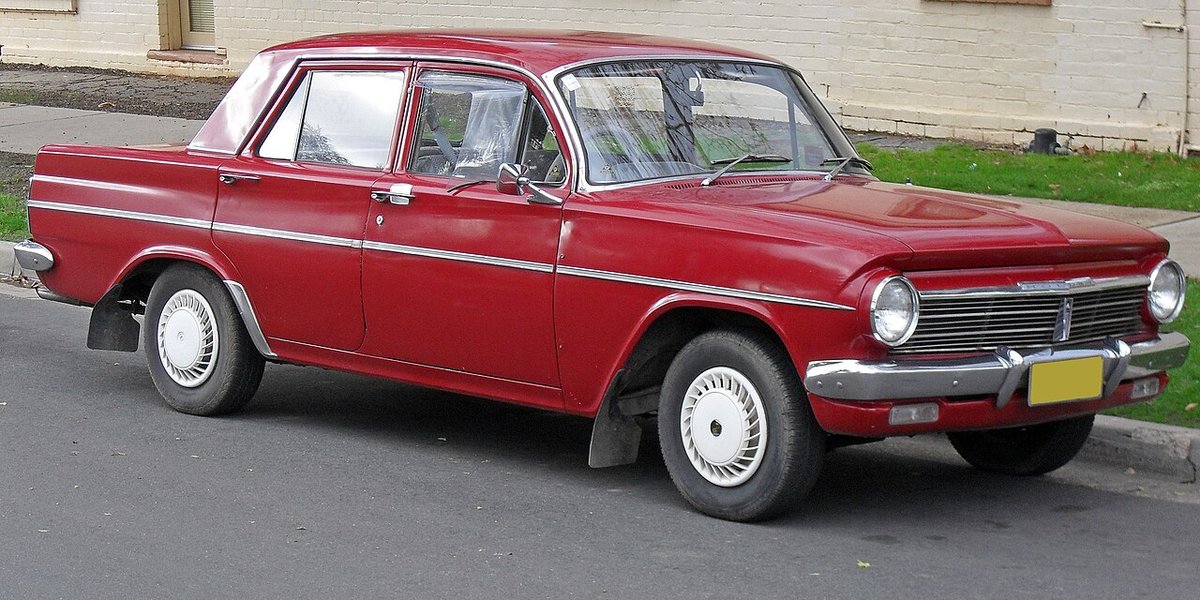
The Holden EH and EJ represent a golden era of Australian automotive design and engineering, when the local industry was confidently producing vehicles that could stand alongside international competition. Launched in 1963 as the successor to the FE, the EH brought a fresh, modern look combined with mechanical improvements that made it a genuine step forward. The range spanned from practical sedans through to the punchy EH S and EJ GT variants, offering genuine performance credentials that resonated with Australian drivers who wanted style without pretension. Available with different engine options, these cars proved themselves on the road and in competition, earning respect from enthusiasts and the general public alike.
What made the EH and EJ particularly special in the Australian context was their accessibility and versatility. They dominated suburban roads throughout the 1960s and became favourites in club racing and rallying across the country. The EJ GT, introduced in 1964, represented the peak of the line's performance ambitions and has become a genuine collector's piece. These cars were engineered with practical Australian conditions in mind, from the solid construction to the straightforward mechanical layouts that made ownership and maintenance manageable for ordinary blokes. The EH and EJ demonstrated that Australian engineering and design could deliver character and capability without chasing overseas trends.
Today, the EH and EJ occupy a cherished place in the classic car community. They represent an important chapter in Holden's history and Australian motoring culture more broadly. Whether it's a tidy EJ GT with its distinctive bonnet bulge or a practical family sedan, these cars are genuinely fun to drive and genuinely Australian. They've aged with dignity, and there's a healthy enthusiast following that recognises their honest engineering and unpretentious charm. For many, the EH and EJ are the real heart of the classic Holden story.
Thinking of buying a EH / EJ?
What to look for, what to pay, what to avoid.
What to watch for.
Rear Main Seal Oil Leak
Common Engine, Red Motor (149ci and 179ci)
Rear Main Seal Oil Leak
CommonOil drips from the bellhousing area. Oil accumulates on the underside of the engine and gearbox. Oil spots on the garage floor.
The Red Motor uses a two-piece rope-style rear main seal that hardens and shrinks over time. This seal design is inherently less effective than the lip seals used on modern engines. Every Red Motor with more than a few years on the clock will weep from the rear main to some degree.
Replacing the rear main seal requires either removing the engine or dropping the sump and rear main cap. The seal itself is cheap ($20-40). Labour is the expense, budget $500-800 at a workshop. Many owners live with a slow rear main seal leak and just keep the oil topped up. If the leak is significant (more than a spot on the ground overnight), it should be addressed.
Worn Valve Guides
Common Engine, Red Motor (149ci and 179ci)
Worn Valve Guides
CommonBlue smoke on startup that clears after 30-60 seconds. May also smoke on overrun (deceleration after highway driving).
The cast-iron valve guides wear over time, allowing oil to seep past the valve stems and into the combustion chambers. This is accelerated by infrequent oil changes and extended idling periods. The exhaust valve guides wear faster than the intake guides due to the higher temperatures.
Replace the valve guide seals first, this is a relatively simple job that can be done with the head in situ using a valve spring compressor and compressed air ($50-100 for a seal kit). If new seals don't cure the problem, the guides themselves need replacing. This requires removing the head and having a machine shop press out the old guides and install new ones ($300-600 for a complete guide replacement with new seals).
Carburettor Issues
Common Engine, Red Motor (149ci and 179ci)
Carburettor Issues
CommonHard starting, rough idle, flat spots on acceleration, black smoke, poor fuel economy, fuel smell.
The EJ/EH uses Stromberg (single-barrel, 149ci) or Stromberg twin-barrel (179ci) carburettors. After 60+ years, the internal components, needle valves, floats, accelerator pump diaphragms, jets, and gaskets, are all worn. Modern fuel with ethanol attacks old rubber components.
Rebuild the carburettor with a rebuild kit ($60-120). If genuine Stromberg kits are unavailable, many owners convert to a Weber carburettor, a Weber 32/36 DGAV suits the 149, while a Weber 40/40 DCOE or similar is popular on the 179. Weber conversions cost $400-800 including manifold adapter and provide improved throttle response and easier tuning. For the 179, a set of twin SU carburettors on a purpose-built manifold was a popular period modification and is still available through specialists.
Cooling System Marginal in Traffic
Common Engine, Red Motor (149ci and 179ci)
Cooling System Marginal in Traffic
CommonTemperature gauge rises in slow traffic, particularly on hot days. May push coolant out the overflow.
The Red Motor generates more heat than the Grey Motor it replaced, and the cooling system, while adequate for 1960s driving, struggles in modern stop-start traffic, particularly in Australian summer conditions. The original radiator may be partially clogged with scale after 60 years. The engine-driven fan only moves adequate air at highway speeds.
First, have the radiator recored or replaced ($300-600). Flush the entire cooling system. Ensure the thermostat is functioning correctly (replace it, they're cheap). Add an electric thermo fan behind the radiator for low-speed cooling ($100-200 for a Davies Craig kit). Check that the water pump is not leaking or cavitating. Ensure the fan belt is tight.
Distributor Wear
Common Engine, Red Motor (149ci and 179ci)
Distributor Wear
CommonMisfiring, erratic idle, timing drift, poor fuel economy, hard starting.
The distributor shaft bushings wear, allowing the shaft to wobble. This causes the points gap to vary and the spark timing to become erratic. The centrifugal advance mechanism's springs weaken, and the vacuum advance diaphragm can rupture.
Rebuild the distributor, new shaft bushings, points, condenser, advance springs, and vacuum unit. Budget $100-200 for parts. Alternatively, fit an electronic ignition module (Pertronix) that replaces the points and condenser with a maintenance-free electronic trigger ($100-150). This is the single most effective and invisible upgrade you can make to the ignition system.
Second Gear Synchro Wear (3-Speed Manual)
Minor Transmission
Second Gear Synchro Wear (3-Speed Manual)
MinorGrinding or crunching when shifting into second gear, particularly on quick downshifts.
Second gear synchro wears because it's the most-used ratio. After 60 years, even lightly-used gearboxes will have wear.
Gearbox rebuild with new synchro rings. Budget $800-1,500. Double-clutching on downshifts extends synchro life. Some owners simply tolerate the crunch.
Join the conversation.
Common questions.
What's the difference between the EJ and the EH?
The EJ (1962-1963) and EH (1963-1965) share the same basic platform, but the EH is a significant improvement. The EH has a subtly wider body with more glass area, revised styling, improved suspension tuning, and, crucially, the optional 179ci Red Motor engine that the EJ never had.
What is the Red Motor?
The Red Motor is Holden's first overhead-valve engine family, introduced with the EJ in 1962. It replaced the Grey Motor sidevalve engine that had powered every Holden since 1948.
Which engine should I look for, 149 or 179?
The 179ci every time, if your budget allows. The 179 produces approximately 115 hp compared to the 149's 75 hp, that's a 53% increase, and it's immediately noticeable behind the wheel.
How reliable is the Red Motor?
Extremely reliable. The Red Motor is one of the toughest engines Holden ever produced.
Own a EH / EJ?
Share your car with the community. explore more Holden models.