300ZX (Z32)
1989-2000 / Coupe / Convertible / Japan
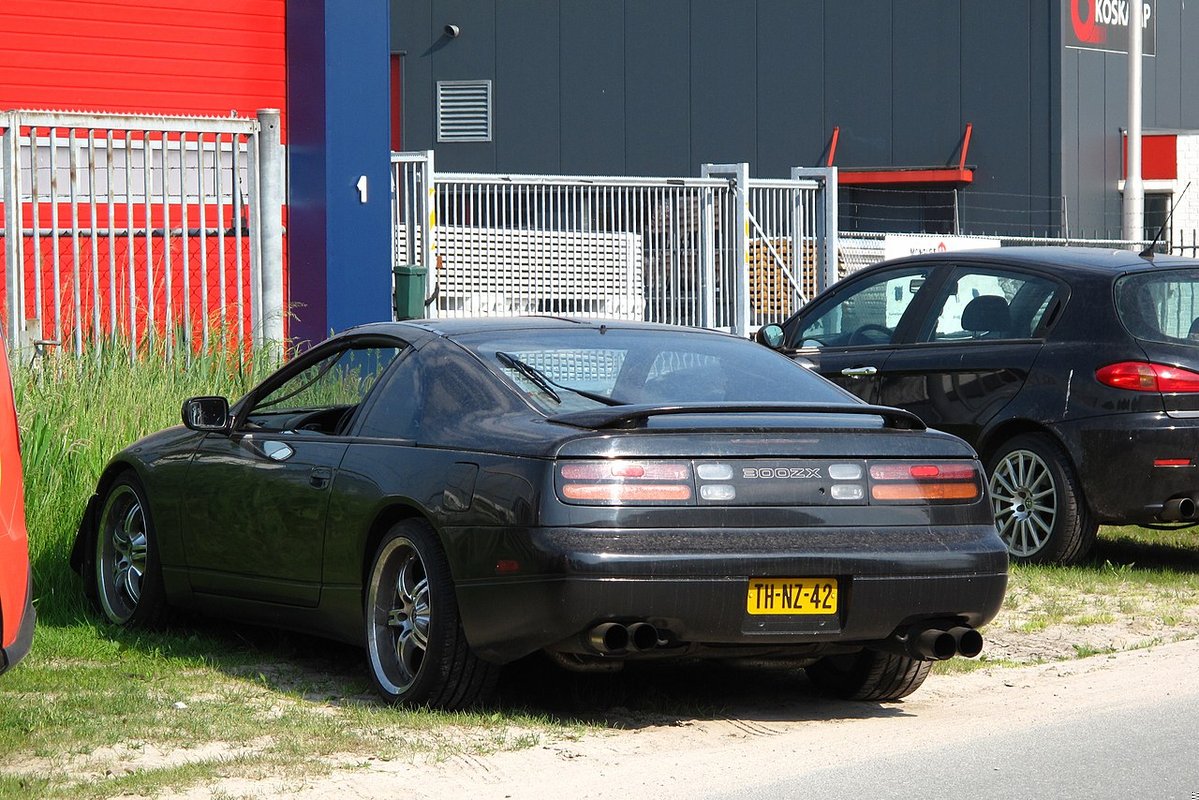
The Z32 300ZX represents Nissan's ambitious attempt to create a world-class grand tourer that could compete with the best of Europe and America. Launched in 1989, it was a genuine leap forward from the Z31, featuring a twin-turbocharged 3.0-liter V6 in its most potent form, sophisticated all-wheel-drive and all-wheel-steering systems on certain variants, and a level of technology that was genuinely cutting edge for the era. It's a car that rewards patience and understanding, with a character quite different from its more aggressive American rivals, favouring balance and composure over brute force.
In Australia, the 300ZX carved out a dedicated following among enthusiasts who appreciated its engineering sophistication and relatively affordable entry point to Japanese performance. The car's presence in local tuning circles and its occasional appearances in club racing events cemented its status as a genuine enthusiast's machine rather than just another sports car. The Z32 also benefited from strong Nissan support in Australia during this period, making parts availability and mechanical knowledge reasonably accessible for owners willing to explore their car's potential.
What makes the Z32 special is its uncompromising design philosophy. It's heavier than its contemporaries, sure, but that mass is intelligently packaged beneath skin that still turns heads three decades on. The interior is a marvel of 1990s ergonomics, and the driving experience rewards smooth, precise inputs rather than aggression. For the classic car enthusiast, a well-sorted 300ZX remains a legitimate and rewarding ownership proposition, offering genuine performance, reliability, and the satisfaction of piloting something genuinely engineered rather than merely powerful.
Thinking of buying a 300ZX (Z32)?
What to look for, what to pay, what to avoid.
What to watch for.
Timing Belt Failure Risk
Minor Engine -- VG30DE/DETT (All Models)
Timing Belt Failure Risk
MinorIf the timing belt breaks, the valves collide with the pistons. The engine is destroyed. There is no warning -- the belt simply snaps and the engine stops instantly with catastrophic internal damage.
The VG30 is an interference engine with a rubber timing belt that deteriorates with age and mileage. Nissan specified 100,000 km intervals, but many specialists recommend 80,000 km or 5 years, whichever comes first. Heat, oil contamination, and age degrade the belt regardless of mileage.
Replace the timing belt, tensioner, idler pulleys, and water pump as a set. This is the Z32's most important scheduled maintenance item. Cost: $1,500--3,000 due to the extensive labour required to access the belt. The job typically takes 6--10 hours.
Spark Plug Access (Rear Bank)
Common Engine -- VG30DE/DETT (All Models)
Spark Plug Access (Rear Bank)
CommonThe rear three spark plugs become fouled, worn, or fail, causing misfires, rough running, and reduced power.
The spark plugs wear normally -- but the rear bank plugs are buried under the intake plenum and are extremely difficult to access. Many owners defer the rear plug change because of the labour involved, which means the plugs run far beyond their service life.
Remove the upper intake plenum to access the rear bank. Replace all six plugs simultaneously. This is a 2--4 hour job depending on experience. Cost: $200--500 at a workshop (mostly labour).
Oil Leaks
Critical Engine -- VG30DE/DETT (All Models)
Oil Leaks
CriticalOil seepage and dripping from multiple points -- valve cover gaskets, rear main seal, oil pan gasket, timing cover, turbo oil lines (TT), power steering lines, and various sensors.
The VG30 uses numerous rubber gaskets and O-rings that harden and shrink with age. The engine runs hot, accelerating seal degradation. The twin-turbo model has additional oil lines for the turbochargers that add more potential leak points.
Systematic replacement of all gaskets and seals. The valve cover gaskets are the most accessible ($100--200 DIY). The rear main seal requires gearbox removal ($500--1,000). A full reseal is a major undertaking on the Z32 due to engine bay access. Budget $1,000--2,500 for a comprehensive reseal.
Overheating
Minor Engine -- VG30DE/DETT (All Models)
Overheating
MinorTemperature gauge climbs, particularly in traffic or on hot days. Coolant loss. Steam from under the bonnet.
The Z32's cooling system is adequate when all components are fresh, but marginal when they're not. The radiator loses efficiency, the thermostat sticks, the water pump weeps, and the various coolant hoses (there are many) develop leaks. The twin-turbo model generates significantly more heat than the NA.
Replace the radiator (aluminium upgrade recommended: $400--700), thermostat ($20--40), water pump (done with timing belt), and all coolant hoses. Total cooling system refresh: $500--1,000 beyond the timing belt service.
Vacuum Line Deterioration
Common Twin-Turbo System (VG30DETT Only)
Vacuum Line Deterioration
CommonBoost fluctuations, poor throttle response, check engine light, erratic idle, boost creep (boost exceeding target), or inability to make boost.
The twin-turbo system uses a complex network of vacuum lines to control the wastegates, boost solenoids, and various emissions devices. There are over 30 vacuum lines in the engine bay, most made of rubber that hardens, cracks, and splits after 30+ years. A single cracked vacuum line can cause cascading problems that are maddening to diagnose.
Replace all vacuum lines with silicone hose. This is a tedious but straightforward job -- the hardest part is tracing each line and ensuring the routing is correct. Many Z32 owners replace the entire vacuum system in one session using a vacuum line replacement kit ($50--100 for the hose, plus a full day's labour). Cost: $50--100 DIY, $300--600 at a specialist.
Turbocharger Wear
Critical Twin-Turbo System (VG30DETT Only)
Turbocharger Wear
CriticalExcessive turbo whine, metallic grinding or rattling from the turbos, blue smoke under boost (oil passing through worn seals), or reduced boost pressure.
The stock T25 turbochargers have a finite lifespan. After 150,000--200,000 km, the bearings and seals wear. Running the turbos on contaminated or insufficient oil accelerates wear dramatically. Shutting the engine off immediately after hard driving (instead of letting it idle to cool the turbos) also causes bearing damage.
Rebuild or replace the turbochargers. Rebuilt stock turbos: $800--1,500 per pair. New aftermarket turbos: $1,500--3,000 per pair. Many owners upgrade to larger turbochargers at this point. Labour for turbo removal and refitting is significant due to engine bay access. Total cost: $2,000--5,000.
Join the conversation.
Common questions.
What is the difference between the NA and Twin Turbo?
The naturally aspirated (NA) Z32 uses the VG30DE engine producing 166 kW (222 hp). The Twin Turbo (TT) uses the VG30DETT with twin Garrett T25 turbochargers producing 220 kW (300 hp).
Is the Z32 really that hard to work on?
Yes. The Z32's engine bay is one of the most cramped in automotive history.
What is the "gentleman's agreement"?
In the late 1980s, Japanese manufacturers informally agreed to limit advertised power output to 280 PS (206 kW / 276 hp) for domestic market cars. This was called the "gentleman's agreement" and was ostensibly about safety, though it was really about avoiding government regulation.
Should I buy a 2-seater or 2+2?
The 2-seater is the more desirable variant. It has a shorter wheelbase (2,450 mm vs 2,570 mm), less weight (approximately 50 kg lighter), and is generally considered to have better handling due to its more compact dimensions.
Own a 300ZX (Z32)?
Share your car with the community. explore more Nissan models.