Skyline GT-R (R32 / R33 / R34)
1989-2002 / Coupe / Japan
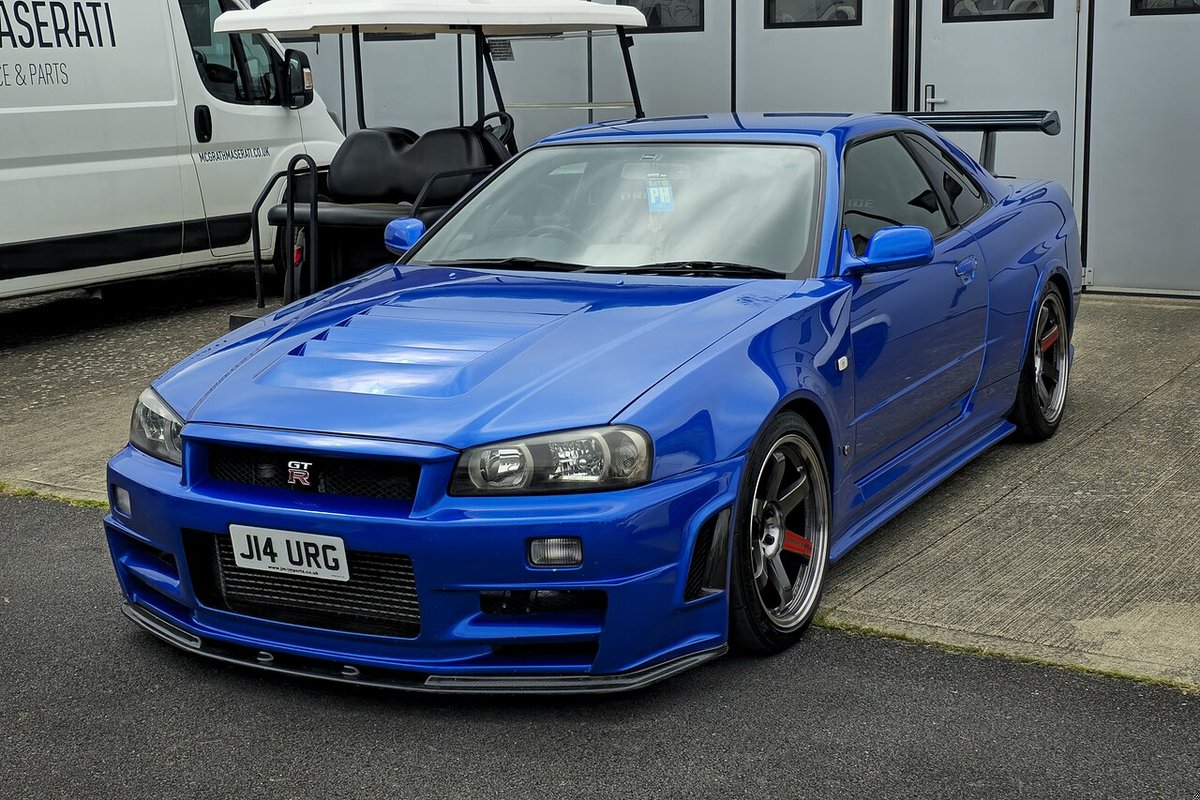
The Nissan Skyline GT-R represents one of the great high-performance car success stories of the modern era. Starting with the R32 in 1989, Nissan created a technological powerhouse that genuinely challenged the establishment, dominating touring car racing and inspiring enthusiasts worldwide. The combination of turbocharged inline-six power, all-wheel drive, and sophisticated electronics made these cars seriously quick, and they've only grown in legend since. The R33 and R34 generations refined the formula further, with the final R34 becoming the poster child for Japanese performance engineering when it arrived in 1999. In Australia, the GT-R developed a passionate following, particularly among those who appreciated raw engineering over marketing hype. The cars have thrived in the local classic and modified scene, with strong communities dedicated to keeping these machines alive and celebrated.
Thinking of buying a Skyline GT-R (R32 / R33 / R34)?
What to look for, what to pay, what to avoid.
What to watch for.
Oil Pump Drive Collar Failure (R32, R33, CRITICAL)
Minor Engine
Oil Pump Drive Collar Failure (R32, R33, CRITICAL)
MinorThe engine loses oil pressure instantly and without warning. The oil pressure gauge drops to zero, the engine seizes within seconds. Total engine destruction.
The RB26DETT oil pump is driven by a collar (sleeve) that fits over the crank snout. On R32 and R33 engines, this collar is made from relatively soft steel and is retained by a single roll pin. Under high RPM, the roll pin can shear or the collar can spin on the crank, causing the oil pump to stop turning. The engine loses oil pressure immediately and the bearings are destroyed within 10-15 seconds.
Install an aftermarket hardened oil pump collar. Nismo and several aftermarket companies (Tomei, GReddy) produce upgraded collars with improved retention. The job requires removing the front timing cover and, on some configurations, the gearbox. Cost: $200-400 for the collar, $300-600 for labour. This is a non-negotiable modification for any R32 or R33 GT-R. It should be the first thing done on a newly purchased car if the history is unknown.
Ceramic Turbo Wheel Failure (All Models)
Critical Engine
Ceramic Turbo Wheel Failure (All Models)
CriticalLoss of boost on one or both turbochargers. In severe cases, ceramic wheel fragments are ingested by the engine, causing catastrophic damage to the cylinders and pistons.
The factory T28 turbochargers use ceramic (silicon nitride) turbine wheels. Ceramic is lighter than steel, which gives faster spool-up, but it is brittle. Thermal shock (rapid temperature changes), over-boost, and age cause the ceramic to crack and eventually shatter. A shattered turbine wheel sends fragments through the exhaust manifold and, if the fragments pass through the wastegate, into the intake tract.
Replace the factory ceramic-wheeled T28 turbochargers with steel-wheeled equivalents. Genuine Nissan steel-wheeled T28 replacements are available, as are aftermarket upgrades (Garrett GT2860RS is a popular direct replacement). Steel-wheeled turbos can handle higher boost and are not susceptible to thermal shock failure. Cost: $2,000-5,000 for a pair of quality replacement turbos, plus fitting.
CAS (Crank Angle Sensor) Failure
Critical Engine
CAS (Crank Angle Sensor) Failure
CriticalEngine misfire, loss of power, intermittent cutting out, or complete no-start. The misfire may be random or consistent, and can come and go.
The CAS is a magnetic pickup sensor located inside the front timing cover, driven off the exhaust camshaft. It provides the ECU with engine position data for ignition timing and fuel injection. The internal components wear with age and heat, and the signal becomes erratic. CAS failure is one of the most common problems on all RB26DETT engines.
Replace the CAS. Genuine Nissan units are available ($300-500). Aftermarket trigger kits (which use a crank-mounted trigger wheel and external sensor) eliminate the CAS entirely and are more reliable for high-RPM applications. Cost: $300-600 for a CAS replacement, $500-1,500 for an aftermarket trigger kit.
Head Gasket Failure
Critical Engine
Head Gasket Failure
CriticalCoolant loss, white smoke from the exhaust, overheating, milky oil, and/or combustion gases in the coolant (detectable with a block tester).
The factory multi-layer steel (MLS) head gasket is adequate for stock boost levels (0.55-0.7 bar) but is the first point of failure when boost is increased. The RB26's long, slender head is prone to lifting between cylinders under high boost, which breaks the gasket seal. Even on stock cars, age and thermal cycling can cause the gasket to fail after 200,000+ km.
Replace the head gasket. On a stock engine, a genuine Nissan MLS gasket is adequate. On a modified engine (above 1.0 bar boost), an aftermarket metal gasket (Tomei, HKS) with head studs (replacing the factory bolts) is required. The head must be checked for flatness and machined if necessary. Cost: $1,500-3,000 all-in for a stock replacement, $3,000-5,000 for an upgraded gasket with studs.
Coil Pack Failure
Common Engine
Coil Pack Failure
CommonMisfire on one or more cylinders, rough idle, loss of power.
The RB26DETT uses individual coil packs for each cylinder (coil-on-plug design on R33 and R34, coil-and-lead design on R32). The coil packs deteriorate with age and heat. The R32's coil pack leads are particularly susceptible to insulation breakdown.
Replace the coil packs. Genuine Nissan units are available, as are aftermarket upgrades (Splitfire, HKS). Replace all six at once, if one has failed, the others are not far behind. Cost: $400-800 for a set of six.
Injector Issues
Critical Engine
Injector Issues
CriticalRough idle, misfire, rich or lean running on individual cylinders.
The factory Nismo 440cc injectors are good quality but can become clogged or develop leaking seals after decades of service. The injector O-ring seals harden and leak fuel, causing a rich condition and fire risk. On modified cars with larger injectors, incorrect sizing or poor tuning causes drivability issues.
Have the injectors professionally cleaned and flow-tested ($150-250 for a set of six). Replace O-ring seals ($20-40 for a set). If the injectors are beyond cleaning, Nismo 740cc or 1000cc injectors are the standard upgrade for modified engines. Cost: $600-2,000 for a set depending on size.
Join the conversation.
Common questions.
What is the difference between an R32, R33, and R34 GT-R?
All three generations use the same RB26DETT twin-turbocharged 2.6-litre inline-six engine and the ATTESA E-TS all-wheel-drive system.
What is the real power output of the RB26DETT?
Nissan officially claimed 206 kW (276 hp / 280 PS) for all three generations. This was a deliberate understatement to comply with the Japanese manufacturers' gentleman's agreement that capped advertised power at 280 PS.
What is the oil pump collar issue and does my car need it?
The oil pump collar (sometimes called the oil pump drive collar or oil pump mod) is a critical modification for R32 and R33 GT-Rs. **The problem:** The factory oil pump is driven by a collar that fits over the crankshaft nose.
Should I delete HICAS?
This is one of the most common modifications on GT-Rs, and the short answer for most owners is yes. **Why delete it:** - The hydraulic HICAS (R32/R33) develops leaks and faults that make the rear end unpredictable - Even when working correctly, HICAS can feel unsettling during spirited driving, the rear steering can feel like the car is stepping out when it is actually just the HICAS activating - For track use, fixed rear geometry is universally preferred for predictability - Deleting HICAS simplifies the car and removes a maintenance burden **Why keep it:** - Originality, for a numbers-matching collector car, removing HICAS reduces value - The R34's electronic HICAS is more reliable than the hydraulic system and integrates with the car's overall dynamics **How to delete:** A HICAS lock bar kit ($200-400) replaces the rear steering rack with fixed-length tie rods.
Own a Skyline GT-R (R32 / R33 / R34)?
Share your car with the community. explore more Nissan models.