240Z / 260Z / 280Z
1969-1978 / Coupe / Japan
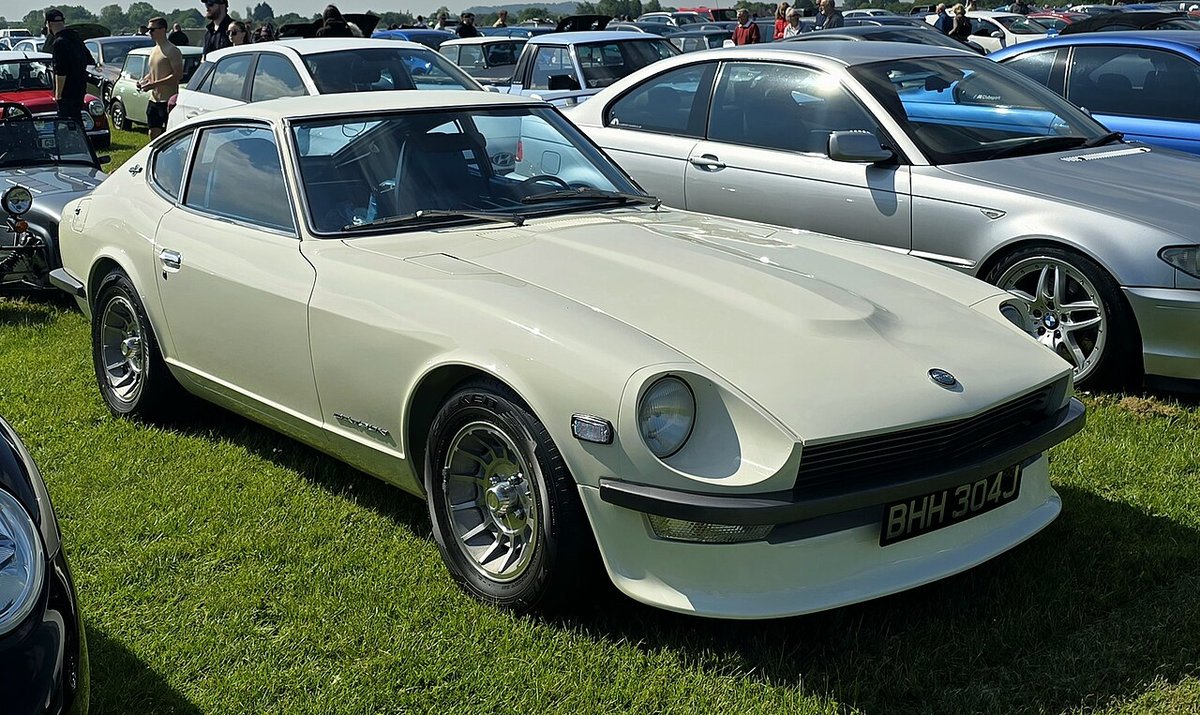
The Datsun Z, born from Nissan's determination to build a world-class sports car, arrived in 1969 as the 240Z and immediately proved the Japanese could do more than copy Western designs. With its long hood, short deck proportions, inline six-cylinder engine, and affordable price point, the Z became the car that broke down barriers and showed enthusiasts you didn't need European pedigree or American muscle to have genuine fun. The 240Z evolved through the 260Z and finally the 280Z, each generation gaining power and refinement while maintaining that essential character that made people queue at dealerships.
In Australia, the Z quickly found devoted followers among serious drivers who appreciated its reliability, handling balance, and surprising performance. The car proved itself on track and road, becoming a fixture in club racing and attracting a passionate following that persists today. Australian Z owners understood what many still do, that this is a properly sorted sports car that rewards smooth inputs and rewards driving it hard, with none of the temperamental reputation that plagued some contemporaries.
What makes the Z historically significant goes beyond mere specifications. It legitimized Japanese sports cars on a global stage and proved that accessible performance didn't mean compromised engineering. The Z earned respect through honest engineering, genuine capability, and a driving experience that felt connected and involving. Even now, these cars command genuine affection from the people who own them, and their presence at any gathering of enthusiasts carries weight.
Thinking of buying a 240Z / 260Z / 280Z?
What to look for, what to pay, what to avoid.
What to watch for.
Structural Rust, Floors, Sills, Strut Towers
Minor Rust
Structural Rust, Floors, Sills, Strut Towers
MinorPerforations in the floor pans, sill (rocker panel) box sections, and front strut tower mounting points. In advanced cases, the floorboard flexes underfoot, the sills crumble when prodded, and the strut towers crack under suspension load.
The Z-car was not well-protected from the factory. Minimal rustproofing, combined with seam-sealed joints that trap moisture, means water gets in and cannot get out. Australian coastal cars are worst affected, but any Z-car that has not been proactively rustproofed will have some degree of structural corrosion.
Depends on severity. Surface rust can be treated with rust converter and encapsulated. Perforated floors require panel replacement, either reproduction floor pans (available from US suppliers like Tabco and Motor Sport Auto) or custom fabrication. Sill replacement requires cutting out the old box sections and welding in new steel, a job for an experienced panel beater. Strut tower repair is critical and must be done properly, poor repairs compromise handling and safety. Budget $5,000-20,000+ for comprehensive structural rust repair, depending on severity.
Battery Tray Corrosion
Common Rust
Battery Tray Corrosion
CommonThe battery tray (right-hand side of engine bay on RHD cars) corrodes and eventually perforates. Rust spreads into the inner guard and firewall.
Battery acid vapour attacks the steel. Older cars with non-sealed batteries are particularly vulnerable. Even sealed batteries produce enough vapour to cause damage over decades.
Replace the battery tray. Reproduction trays are available ($100-250). If rust has spread into the inner guard, the surrounding metal must be cut out and replaced. Prevent recurrence by coating the new tray with POR-15 or similar rust encapsulator and fitting a sealed battery.
Spare Wheel Well Rust
Common Rust
Spare Wheel Well Rust
CommonThe floor of the boot around and beneath the spare wheel well rusts through. Water pooling is visible in the boot.
Water enters through deteriorated taillight seals, boot seal, and rear hatch seal. It pools in the spare wheel well with nowhere to drain. Trapped moisture rusts the metal from both sides.
Replace taillight seals and boot/hatch seals first to stop water ingress. Cut out rusted metal and weld in repair panels. Reproduction spare wheel wells are available from specialist suppliers. Coat the repaired area with POR-15 and cavity wax the enclosed sections.
Rear Quarter Panel Rust
Common Rust
Rear Quarter Panel Rust
CommonRust appears behind the rear wheels, often starting as bubbles under the paint and progressing to perforations.
Road spray from the rear wheels is thrown against the inner guard, which is a double-skinned area that traps moisture. The outer skin rusts from the inside out.
Repair panels are available for the lower rear quarters. The job requires cutting out the affected area, treating the inner skin, and welding in the repair panel. This is panel-and-paint work, budget $1,500-3,000 per side for a professional repair.
SU Carburettor Wear and Tuning Issues (240Z, 260Z)
Common Engine
SU Carburettor Wear and Tuning Issues (240Z, 260Z)
CommonPoor idle, hesitation on acceleration, rich or lean running, black smoke, poor fuel economy, difficult starting. The engine may run well at some RPMs but poorly at others.
The twin SU carburettors use a sliding piston (suction chamber) that rises and falls based on engine vacuum. Over decades, the throttle shafts wear in their bores, creating vacuum leaks that cannot be compensated for by adjustment. The needle and jet wear, the float valve leaks, and the damper oil evaporates. SU carburettors are precision instruments that require regular maintenance, and most Z-car SUs haven't had it.
A full rebuild addresses all wear items: new throttle shaft bushings (if the bodies are not too worn), new needles, new jets, new float valves, new gaskets, and new damper oil (light machine oil, 20W). Cost: $400-800 in parts for a pair. Finding someone who can properly tune SU carburettors is increasingly difficult, this is a dying art. Alternatively, many owners convert to Weber DCOE sidedrafts ($1,500-3,000 for a pair with manifold) or electronic fuel injection (Haltech, Link, or MegaSquirt, $2,000-4,000 including sensors and wiring).
Fuel Injection Faults (280Z)
Common Engine
Fuel Injection Faults (280Z)
CommonHard starting (especially cold), rough idle, hesitation, rich or lean running, stalling. The engine management warning light may illuminate.
The Bosch L-Jetronic fuel injection system uses an airflow meter (AFM) with a mechanical flap that wears with age. The cold start injector and thermo time switch fail. Injector seals harden and leak. The electronic control unit (ECU) can develop dry solder joints. Wiring connectors corrode, creating intermittent faults.
Start with the basics: clean or replace the AFM ($200-500 used, very hard to source new), replace injector seals ($50-80 for a set), clean the cold start injector, test the thermo time switch, and inspect all wiring connectors for corrosion. For a permanent solution, many owners convert to modern aftermarket EFI, a Haltech or Link ECU with new injectors eliminates all age-related injection issues and makes the engine far more tuneable. Cost: $2,000-4,000 for a quality conversion.
Join the conversation.
Common questions.
What is the difference between a 240Z, 260Z, and 280Z?
All three are variations of the original Datsun S30 platform, distinguished primarily by their engines: - **240Z (1969-1973):** L24 2.4-litre inline-six, twin SU carburettors, 151 hp.
Which Z-car should I buy?
It depends entirely on your priorities. **For collecting and appreciation:** The 240Z, specifically a Series 1 (round-tail, 1969-1971).
How do I tell a Series 1 240Z from a Series 2?
The easiest identifier is the taillights: **Series 1 (1969-1971) has round taillights**, while **Series 2 (1972-1973) has rectangular taillights**. Other differences include: - Series 1 has a flatter bonnet without the later bulge - Series 1 interior is simpler with a different dashboard layout - Series 1 uses round-top SU carburettors; Series 2 uses flat-top SUs - Series 1 has different vent window latches and door handles Chassis numbers (HLS30-xxxxxx) can confirm the production date.
Is the Z-car a good daily driver?
In honest terms: no, not really. A Z-car can be driven daily, and many people do, but you need to go in with realistic expectations.
Own a 240Z / 260Z / 280Z?
Share your car with the community. explore more Datsun models.