356
1948-1965 / Coupe / Cabriolet / Speedster / Germany
Photo: Photo by Matti Blume / Wikimedia Commons CC BY-SA 4.0
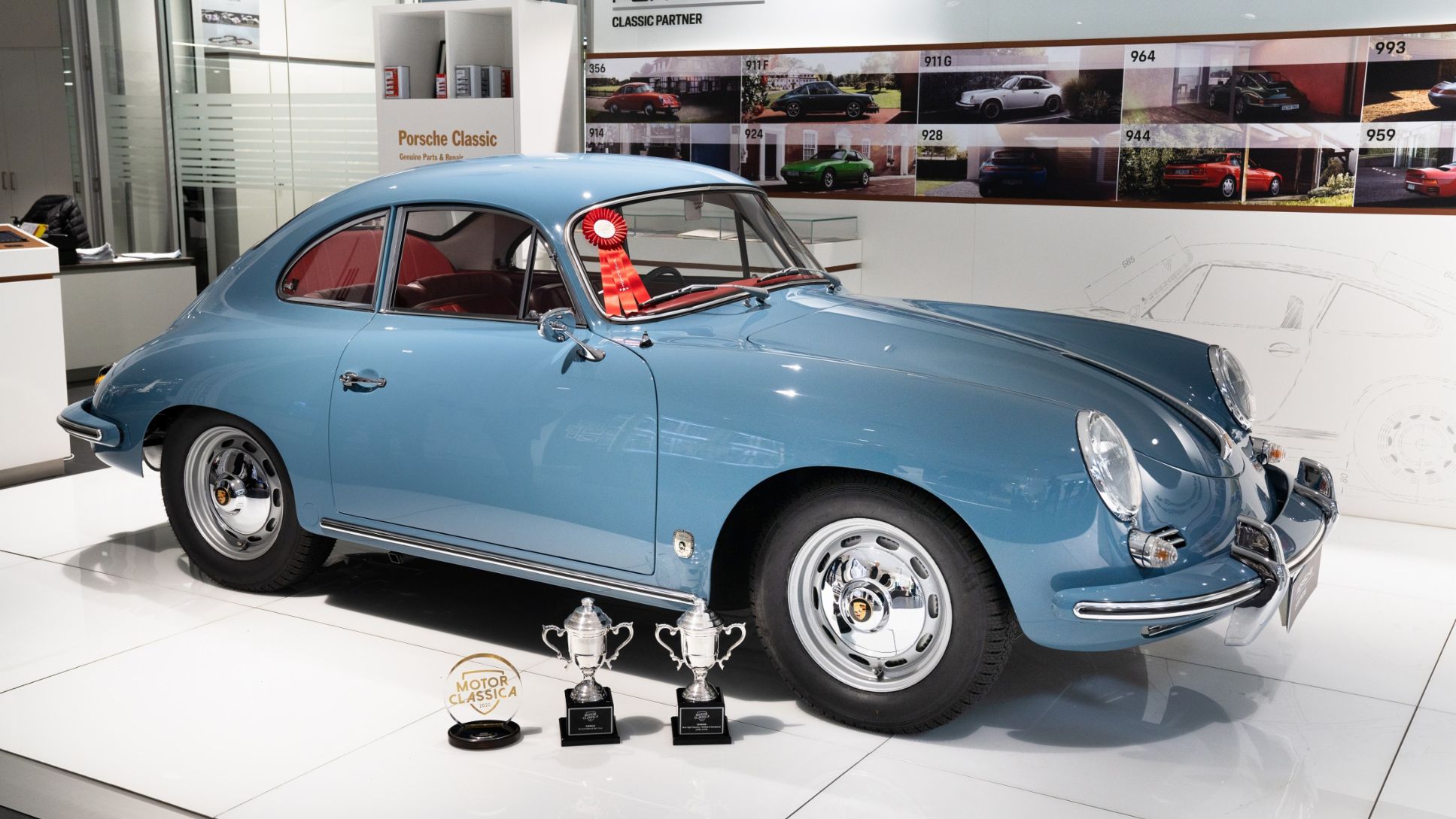
The 356 was Porsche's first production car, evolved from Volkswagen mechanicals into something entirely its own. Ferry Porsche took the Beetle's basic layout and transformed it into a lightweight sports car that could win races and charm drivers in equal measure. The Speedster variant, with its low-cut windscreen and minimal equipment, is one of the most beautiful and valuable sports cars ever made.
Early cars had just 40hp but weighed almost nothing, making them genuinely entertaining on any road with corners. The later Super 90 and Carrera models with their complex four-cam engines offered serious performance. Australian-delivered 356s are rare, and the community here is small but deeply knowledgeable. These are blue-chip collector cars now, with Speedsters regularly exceeding half a million dollars at auction. Even the more modest coupes and cabriolets are serious investments that happen to be wonderful to drive.
Thinking of buying a 356?
What to look for, what to pay, what to avoid.
What to watch for.
Floor Pan Corrosion
Minor Body and Structure
Floor Pan Corrosion
MinorThe floor pans develop rust, perforation, and structural weakness. In severe cases, you can see the road through the floor. The driver's footwell and the area around the pedal box are particularly vulnerable.
The 356 floor pan is mild steel with no galvanising. Road spray attacks from below while moisture from leaking windscreen seals, door seals, and condensation attacks from above. The floor pan sits close to the road surface, and stone chips remove any protective coating.
Replacement floor pans are available from specialists like Stoddard and Restoration Design. Fitting requires stripping the interior, removing the seats and pedal assembly, cutting out the old pan, and welding in the new one. The new pan must be correctly aligned to maintain the body's geometry. Cost: $8,000-$20,000 at a specialist depending on extent and whether heater channels are also affected.
Heater Channel Rot
Minor Body and Structure
Heater Channel Rot
MinorThe sills (rocker panels) that run along each side of the car are actually heater channels, hollow box sections that carry warm air from the engine compartment to the cabin. They corrode from the inside out, and by the time you see external rust, the structural integrity is already compromised.
Warm, moist air from the engine-driven heater system condenses inside the channels. Drain holes block with debris. The channels rot from inside, hidden from view by external trim and undercoating.
Replacement heater channels are available as reproduction parts. Fitting is major surgery, the car essentially needs to be separated at the sills, the old channels cut out, and new ones welded in with precise alignment. This is the most significant body repair on a 356. Cost: $10,000-$25,000 per side at a specialist body shop.
Battery Box Corrosion
Critical Body and Structure
Battery Box Corrosion
CriticalThe metal surrounding the battery in the front compartment corrodes through from acid exposure. The corrosion spreads to adjacent panels and structural members.
Lead-acid batteries vent acid vapour during charging, and minor spills during topping-up eat through mild steel. The battery box area is enclosed, trapping acid fumes.
Remove the battery, neutralise the acid with baking soda solution, and assess the damage. Surface corrosion can be treated with rust converter and sealed. Perforated metal requires cutting out and welding in repair patches. Some owners fit a fibreglass battery box liner to protect the metal. Cost: $500-$3,000 depending on severity.
Longitudinal Member (Helly) Corrosion
Minor Body and Structure
Longitudinal Member (Helly) Corrosion
MinorThe main longitudinal structural members that run beneath the floor develop rust and lose structural integrity. These members carry the suspension loads and are critical to the car's structure.
Road spray, trapped moisture, and general age. Original undercoating traps moisture against the metal when it develops cracks, the undercoating that was meant to protect actually accelerates corrosion.
Specialist fabrication and welding. This is not a bolt-on repair, the members must be carefully reinforced or replaced with correctly profiled steel. Cost: $5,000-$15,000 depending on severity. A car with both longitudinals gone is approaching the threshold where restoration becomes uneconomic.
Oil Leaks
Common Engine
Oil Leaks
CommonOil weeping or dripping from the pushrod tube seals, rocker cover gaskets, case halves, main seal, and oil cooler connections. A warm 356 engine will have oil residue on virtually every surface.
The 356 engine uses simple gaskets and seals that were never designed for zero-leak performance. The case halves are sealed with a paper gasket and secured with through-bolts, as the case bolts lose torque over decades, the joint weeps. Pushrod tube seals are spring-loaded rubber seals that harden with heat cycling.
A complete reseal addresses all leak points in one session. Pushrod tube seals: $200-$400 for parts plus labour. Case half reseal requires engine removal and splitting the case, this is effectively a partial rebuild. Cost for full reseal: $2,000-$4,000 at a specialist.
Cylinder Wear and Low Compression
Common Engine
Cylinder Wear and Low Compression
CommonReduced power, increased oil consumption, blue smoke under acceleration, and difficulty starting. Compression readings below 100 psi or uneven across cylinders.
The 356's air-cooled cylinders and pistons wear over time, particularly if the engine has been run without adequate warm-up, with dirty oil, or with the wrong oil viscosity. The cooling system (such as it is, an engine-driven fan and air ducting) must be intact for even cylinder temperatures. Blocked or damaged cooling tinware causes localised overheating and accelerated wear.
Cylinder and piston replacement (available in standard and oversize). A top-end rebuild includes new cylinders, pistons, rings, valve job, and new pushrod tube seals. Cost: $3,000-$6,000 for parts and labour. If the crankcase is worn (main bearing surfaces), a full engine rebuild is $8,000-$15,000.
Join the conversation.
Common questions.
What is the Porsche 356?
The 356 is the first production car built by Porsche, manufactured from 1948 to 1965. It is a rear-engined, rear-wheel-drive sports car powered by an air-cooled flat-four engine derived from Volkswagen mechanicals.
What is the difference between a Pre-A, A, B, and C?
**Pre-A (1948-1955):** The earliest production cars. Split windscreen on the very earliest, then a bent (curved one-piece) windscreen.
How much does a Porsche 356 cost in Australia?
Prices vary enormously by variant and condition. In AUD as of 2026: - **356C Coupe (driver condition):** $80,000-$130,000 - **356A/B Coupe (driver condition):** $80,000-$180,000 - **Pre-A (any condition):** $80,000-$500,000+ - **Speedster (any condition):** $350,000-$800,000+ - **Cabriolet:** 30-50% premium over equivalent coupe - **Carrera (quad-cam):** $300,000-$800,000+ Matching numbers and a Porsche Certificate of Authenticity add significant value at any price point.
Is the 356 related to the Volkswagen Beetle?
Yes, directly. The 356's engine, gearbox, and suspension were derived from the Volkswagen Beetle, which Ferdinand Porsche senior had designed before the war.
Own a 356?
Share your car with the community. explore more Porsche models.