Land Cruiser 40 Series
1960-1984 / SUV / Utility / Japan
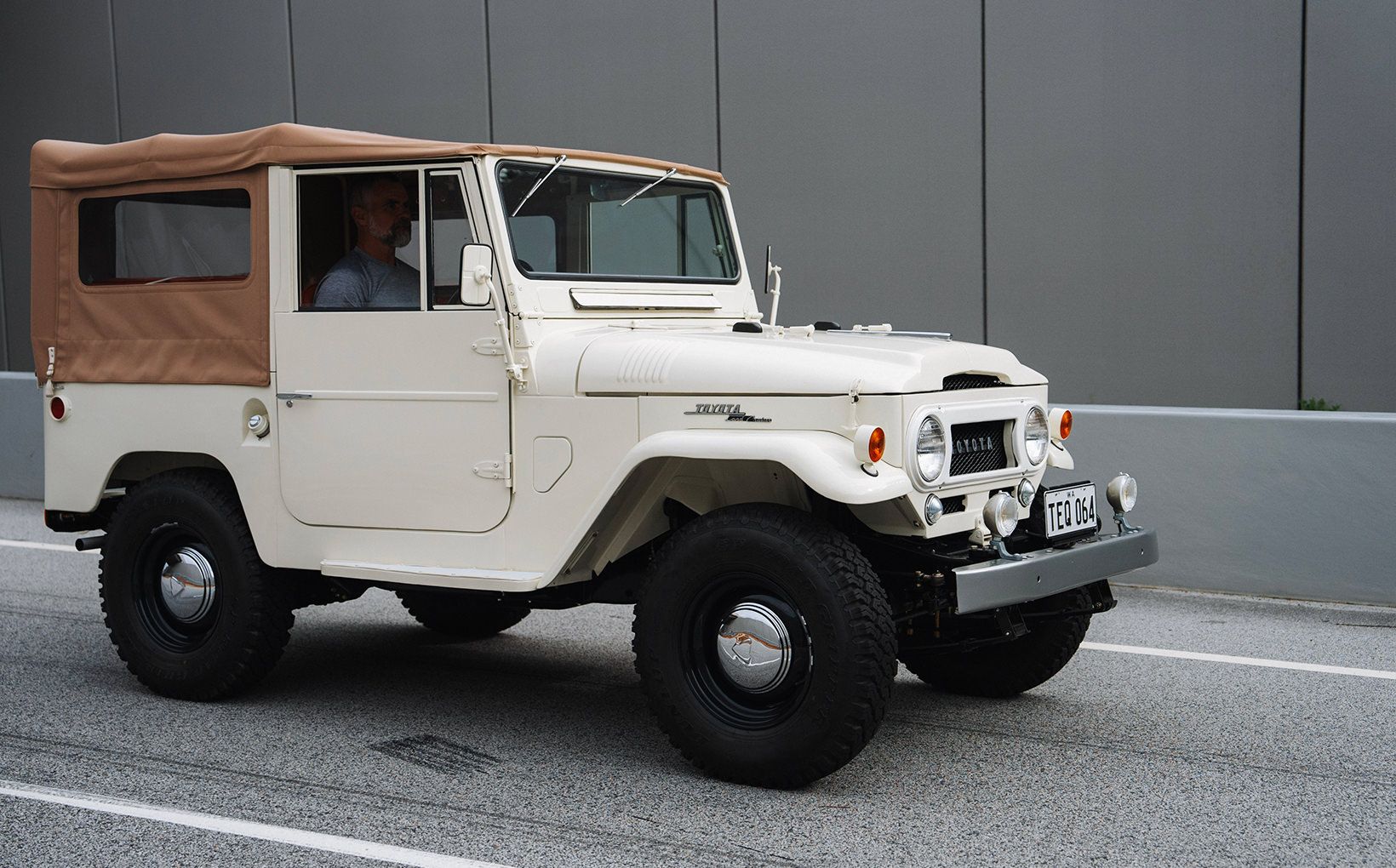
The 40 Series Land Cruiser was built for the Australian outback, almost literally. Toyota's answer to the Land Rover took the concept of indestructible off-road transport and refined it with Japanese engineering precision. The combination of the bulletproof F-series engine, simple mechanicals, and genuine off-road capability made it the vehicle of choice for farmers, miners, and anyone who needed to get somewhere remote and back again.
The short-wheelbase FJ40 is the most iconic variant and now commands serious collector money, with pristine examples reaching six figures. The longer FJ45 ute and troopcarrier were the workhorses that actually built Australia's rural infrastructure. Finding an unmolested example of any variant is increasingly difficult, as most were worked hard and then modified further. The 40 Series is more than a car in Australia, it's a piece of the national story.
Thinking of buying a Land Cruiser 40 Series?
What to look for, what to pay, what to avoid.
What to watch for.
Floor Pan Corrosion
Critical Rust
Floor Pan Corrosion
CriticalThe floor pans develop surface rust, then pitting, then perforation. In advanced cases, the driver can see the ground through the floor. The seat mounting points lose structural integrity.
Water enters the cabin through deteriorated door seals, the windscreen frame, and the transmission tunnel. On Australian vehicles, red dust mixed with moisture creates a slurry that sits on the floor and holds moisture against the metal. Vehicles used for creek crossings or that operated in tropical Queensland and the Top End are particularly affected. The floor pans have no drainage holes from the factory, so water that enters has no way out.
Minor surface rust can be treated with a rust converter (Neutrarust or similar), primed, and sealed. Perforated floors require cutting out the damaged metal and welding in repair panels. Reproduction floor pan sections are available from specialists. A full floor replacement on both sides is a 20-40 hour job and costs $2,000-5,000 in materials and labour. Prevention is better than cure: keep door seals in good condition, clear drain holes in the body, and apply a quality underbody seal.
Firewall Rot
Critical Rust
Firewall Rot
CriticalThe firewall develops rust around penetrations, where the clutch master cylinder, brake master cylinder, wiring harnesses, and heater hoses pass through the bulkhead. In severe cases, the firewall becomes structurally compromised.
Every hole in the firewall is a potential moisture entry point. Worn grommets, deteriorated sealant, and leaking master cylinders allow water and brake fluid to sit against the metal. The engine bay side of the firewall is exposed to heat cycling and road spray, accelerating corrosion.
Localised rust around penetrations can be cut out and patched with welded steel plate. Extensive firewall rust requires removing the engine and dash to access both sides. This is a major repair, budget $1,500-4,000 depending on severity. When repairing, install new grommets on every penetration and seal with a quality polyurethane sealant.
Sill and Rocker Panel Decay
Critical Rust
Sill and Rocker Panel Decay
CriticalThe sills (the structural members running along the bottom of the body below the doors) rust from the inside out. External paint may look fine while the interior is completely hollowed.
Mud, water, and debris enter the sills through gaps and drain holes. In outback use, fine red dust packs into every cavity and absorbs moisture like a sponge. The sills are box sections that trap moisture with no ventilation. Vehicles that have been parked in paddocks or under trees for years are worst affected.
Tap along the sills with a hammer to identify the extent of the rust (solid metal rings, rotten metal thuds or gives way). Minor localised rust can be cut and patched. Full sill replacement requires stripping the body panels and is a $3,000-6,000 repair. This is a job for a qualified fabricator, the sills are structural and must be welded correctly.
Chronic Overheating (F and 2F Engines)
Critical Cooling System
Chronic Overheating (F and 2F Engines)
CriticalThe temperature gauge climbs above normal under load, on hills, towing, or in slow traffic. In severe cases, the engine boils over and dumps coolant.
The F and 2F petrol engines produce substantial heat and rely on a mechanical fan and a single-core radiator that was marginal when new. Decades of scale buildup inside the block and radiator reduce coolant flow. The original fan clutch (if fitted) wears and stops engaging properly. Australian summer temperatures push the cooling system beyond its design limits, particularly in inland areas where ambient temperatures regularly exceed 40 degrees.
Start with the basics: flush the cooling system thoroughly (including the block, not just the radiator), replace the thermostat ($20-40), and check the fan belt tension. If the radiator is original, have it tested for flow rate, a partially blocked radiator is the most common cause. Re-coring ($300-600) or fitting an aluminium replacement ($400-800) solves the problem permanently. An electric thermo fan ($150-300) provides additional airflow at low speeds. On the 2F, also check the water pump for bearing play and weeping.
Diesel Engines and Cavitation
Common Cooling System
Diesel Engines and Cavitation
CommonThe B, 3B, H, and 2H diesels develop pinhole leaks in the cylinder liners and coolant passages. Coolant loss with no visible external leak. White residue around coolant hose connections.
Diesel engines produce more vibration than petrol engines, and this vibration causes cavitation, microscopic bubbles forming and collapsing in the coolant. Over time, cavitation erodes the cylinder liner walls from the coolant side. This is a known issue on all the indirect-injection diesels used in the 40 Series, particularly the 2H when run with incorrect or depleted coolant.
Use a quality coolant with supplemental coolant additives (SCAs) that contain anti-cavitation chemistry. Change the coolant every two years without exception. If cavitation damage has already occurred, the engine needs to be stripped and the liners replaced or sleeved. This is a major rebuild, budget $3,000-6,000. Prevention through correct coolant maintenance is far cheaper.
Steering Box Excessive Play
Common Steering
Steering Box Excessive Play
CommonThe steering wheel has significant free play before the front wheels respond. At highway speeds, the vehicle wanders and requires constant correction. The steering feels vague and imprecise.
The recirculating ball steering box wears internally as the balls and worm gear develop play. The sector shaft bushings also wear. This is exacerbated by off-road use, particularly rock crawling and heavy corrugations that put lateral loads on the steering gear.
Adjust the steering box first: there is an adjustment screw on top of the box that takes up internal clearance. If adjustment cannot reduce play to an acceptable level (less than 30 mm at the steering wheel rim), the box needs rebuilding or replacing. Exchange reconditioned units are available ($400-800). While you're at it, replace the tie rod ends, drag link ends, and relay rod, these all contribute to steering slop and are relatively cheap ($50-100 each).
Join the conversation.
Common questions.
Overview
The Land Cruiser 40 Series spans a 24-year production run (1960-1984) across dozens of variants, engine options, and body styles. That breadth creates a lot of questions, particularly for buyers entering the market for the first time.
Should I buy petrol or diesel?
This depends entirely on how you intend to use the vehicle. **Petrol (F or 2F engine)** is the better choice if you want a weekend vehicle for short trips, car shows, and light recreational use.
What's the difference between an FJ40 and a BJ40?
The letters before the number indicate the engine family. The number indicates the chassis/body style.
Is the FJ40 or the BJ42 more valuable?
In Australia in 2026, the FJ40 commands the highest prices overall, particularly in original or correctly restored condition. The FJ40 is the icon, the one that appears in films, advertisements, and on bedroom walls.
Land Cruiser 40 Series owners.
Own a Land Cruiser 40 Series?
Share your car with the community. explore more Toyota models.