1600 / 510
1967-1973 / Sedan / Japan
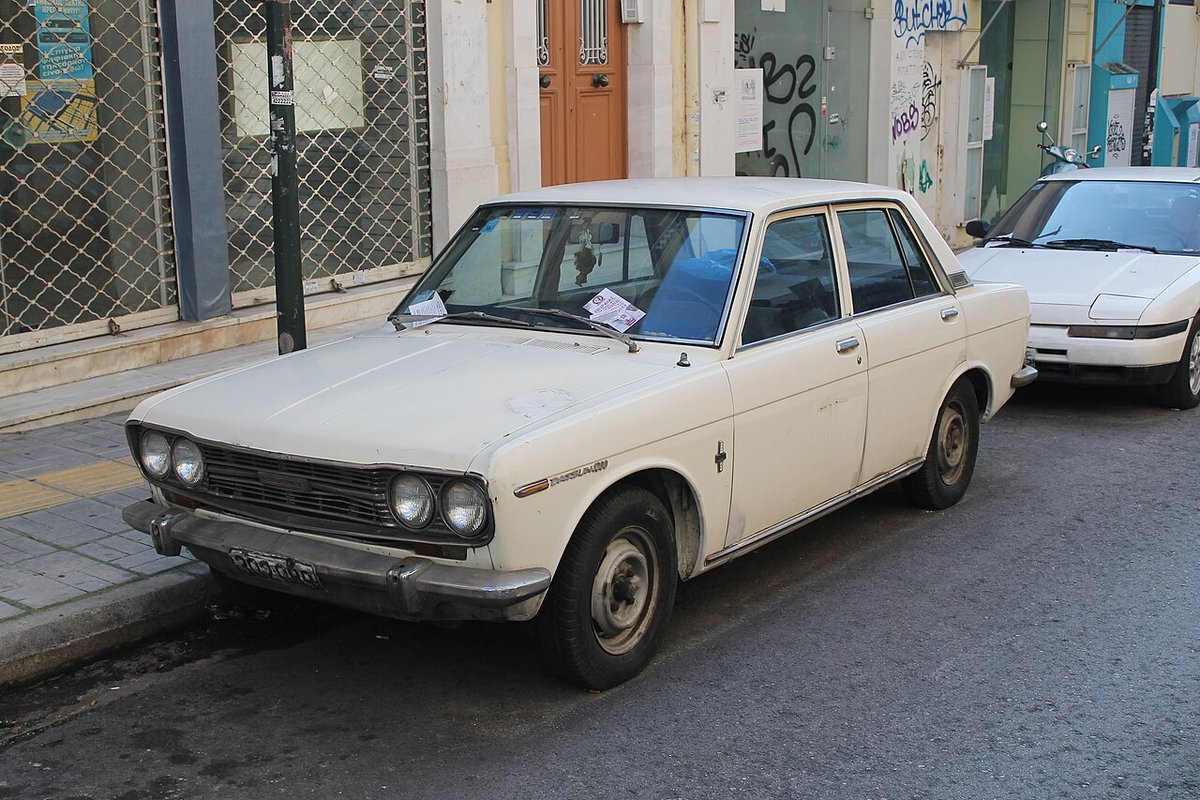
Photo: Charlie from United Kingdom / Wikimedia Commons CC BY 2.0
The Datsun 1600 and its later evolution as the 510 represent a genuine turning point in affordable motoring. Released in 1967, this compact sedan brought Japanese engineering competence to the masses at a time when reliability was far from guaranteed in budget cars. With its willing 1.6-litre four-cylinder engine, rack-and-pinion steering, and surprisingly sorted chassis dynamics, the 1600/510 proved that you didn't need European pedigree or American muscle to build something genuinely enjoyable to drive. It was genuinely quick for its class and, more importantly, genuinely honest.
In Australia, the 1600/510 became a fixture on the club racing scene throughout the late 1960s and 1970s. The car's mechanical simplicity and forgiving nature made it perfect for privateer competitors, and it earned a reputation as a reliable platform for modification. The straightforward engine internals and easily accessible running gear made it a favourite for those learning to wrench as well as those building their first racing cars. You'll still find well-maintained examples turning up at CAMS events and club meetings, testament to their longevity and the affection enthusiasts hold for them.
What makes the 1600/510 special isn't any single revolutionary feature, but rather its completeness as a package. It arrived at the exact moment when Japanese manufacturers were ready to challenge established assumptions about what affordable cars should be, and it did so with no pretence, no shortcuts, and genuine engineering integrity. For collectors and users alike, it represents an important chapter in automotive history, and a car that's simply rewarding to own and drive.
Thinking of buying a 1600 / 510?
What to look for, what to pay, what to avoid.
What to watch for.
Floor Pan Corrosion
Common Body and Structure
Floor Pan Corrosion
CommonSoft, spongy, or perforated floor pans. Wet carpet after rain. Road noise increases noticeably as the floors thin. In extreme cases, the floor is partially or entirely gone.
The floor pans are thin-gauge steel with minimal factory corrosion protection. Road spray from below and water entry from above (through deteriorated seals) attack the metal from both sides. Australian humidity accelerates the process even without road salt.
Weld in repair panels. Some reproduction floor sections are available; others must be fabricated from flat sheet steel by a competent panel beater. This is a common and well-understood repair in the 510 community. Cost: $500--1,500 per section, depending on extent and fabrication requirements.
Sill (Rocker Panel) Corrosion
Minor Body and Structure
Sill (Rocker Panel) Corrosion
MinorThe outer sill skin softens and crumbles. Door alignment changes as the inner sill structure weakens. The car may creak or flex over bumps.
Box-section sills trap water when drain holes block. Corrosion works from inside, so the damage is often worse than it appears from outside.
Full sill replacement -- inner and outer sections. Some repair panels are available; others require fabrication. Cost: $1,000--2,500 per side.
Inner Guard and Strut Tower Corrosion
Minor Body and Structure
Inner Guard and Strut Tower Corrosion
MinorThe inner front fenders around the MacPherson strut top mounts corrode and thin. In severe cases, the strut tower can deform under load.
Road spray and trapped moisture in the double-skinned areas around the radiator support and inner guards. Poor drainage design traps water.
Fabricate and weld repair sections. Strut tower reinforcement plates are available from some specialists. Cost: $800--2,000 per side.
Rear Wheel Arch Corrosion
Critical Body and Structure
Rear Wheel Arch Corrosion
CriticalBubbling paint, perforation, and structural weakening of the inner and outer rear wheel arches.
Road spray and debris accumulate between the inner and outer skins. The rear suspension mounting points are nearby, so severe rust can affect them.
Cut out and replace with new metal. Some reproduction arch sections are available. Cost: $500--1,500 per side.
Spare Tyre Well Corrosion
Common Body and Structure
Spare Tyre Well Corrosion
CommonThe boot floor around the spare tyre well perforates. Water pools in the spare tyre recess.
Water enters through tail-light seals and boot seal failures. The spare tyre well is the lowest point and collects water that doesn't drain.
Weld in repair sections. Cost: $300--800.
Oil Leaks
Critical Engine -- L-Series (L16)
Oil Leaks
CriticalOil seepage and dripping from multiple points on the engine. Common leak points: valve cover gasket, timing cover gasket, oil pan gasket, rear main seal, distributor shaft seal, cam seal.
The L-series uses cork, rubber, and paper gaskets that deteriorate over 55 years. The L16 was not the tightest engine when new; age makes everything worse.
Systematic reseal. Replace all gaskets and seals in one session. The rear main seal requires gearbox removal. Cost: $150--300 DIY for gasket set, $500--1,000 at a workshop for a full reseal.
Join the conversation.
Common questions.
What is the difference between a Datsun 510 and a Datsun 1600?
They are the same car, sold under different names in different markets. In North America, it was the Datsun 510.
Why is it called "the poor man's BMW 2002"?
The Datsun 510 and BMW 2002 share a remarkably similar formula: compact, lightweight, rear-wheel-drive sedans with overhead-cam four-cylinder engines, independent rear suspension, and a chassis that prioritised driving engagement. Both were designed in the mid-1960s and sold to similar markets.
Which model should I buy?
**2-door SSS:** The most desirable variant. Lightest, stiffest, with the sporting extras (twin carburettors, close-ratio gearbox, disc brakes on some).
How bad is the rust?
Very bad. The 510/1600 is one of the rustiest Japanese cars of its era.
Own a 1600 / 510?
Share your car with the community. explore more Datsun models.